Column
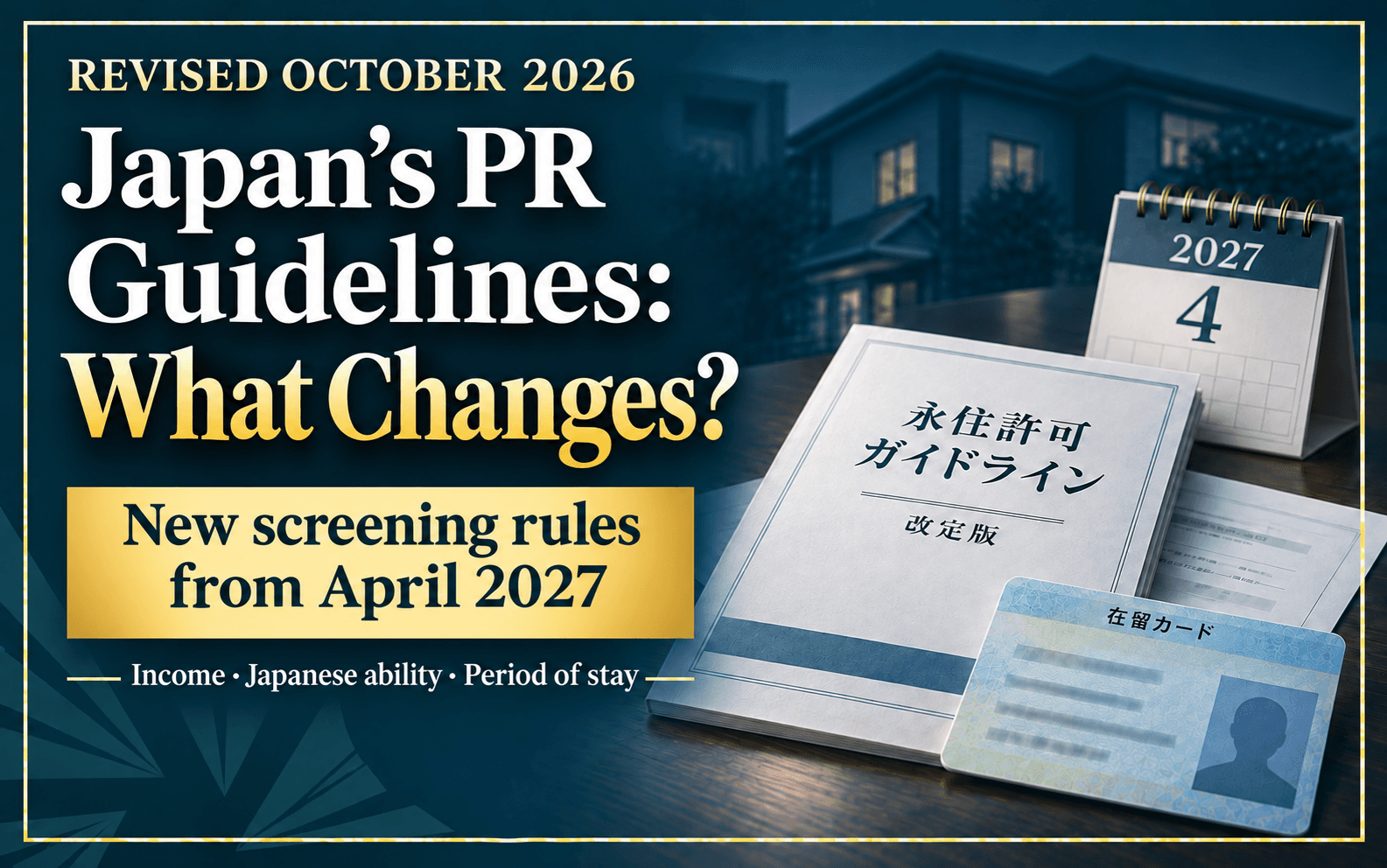
Japan’s New Permanent Residence Guidelines: What Changes From April 2027? 【October 2026 Revision】
Japan substantially revised its Permanent Residence Guidelines on October 1, 2026. This guide explains the new rules on household income, Japanese ability, extended overseas stays, social rules, children’s schooling and spouse/child residence requirements.
Calculate your Highly Skilled Professional pointsOn October 1, 2026, Japan’s Immigration Services Agency substantially revised its Guidelines for Permanent Residence.
The revised guidelines provide much more detail on issues that were previously assessed less explicitly, including household income and extended periods outside Japan.
They also introduce clearer consideration of Japanese-language ability, understanding of Japanese systems and rules, school attendance for compulsory-school-age children, and other factors connected with long-term settlement in Japan.
The special residence-period rules available to spouses and children of Japanese nationals, permanent residents and special permanent residents will also change.
However, not every new rule took effect on October 1, 2026.
The applicable standards depend on when the Permanent Residence application is filed.
When do the new Permanent Residence Guidelines apply?
The effective date is one of the most important points in the October 2026 revision.
Applications filed on or before March 31, 2026 are assessed under the guidelines revised on February 24, 2026.
Applications filed between April 1, 2026 and March 31, 2027 are also generally assessed under the February 2026 guidelines.
However, the new rules concerning income are already being applied to applications filed from April 1, 2026 onward.
For applications filed on or after April 1, 2027, the October 1, 2026 guidelines will generally apply in full.
This means that applicants filing in 2026 may face different requirements from applicants filing only a few months later in 2027.
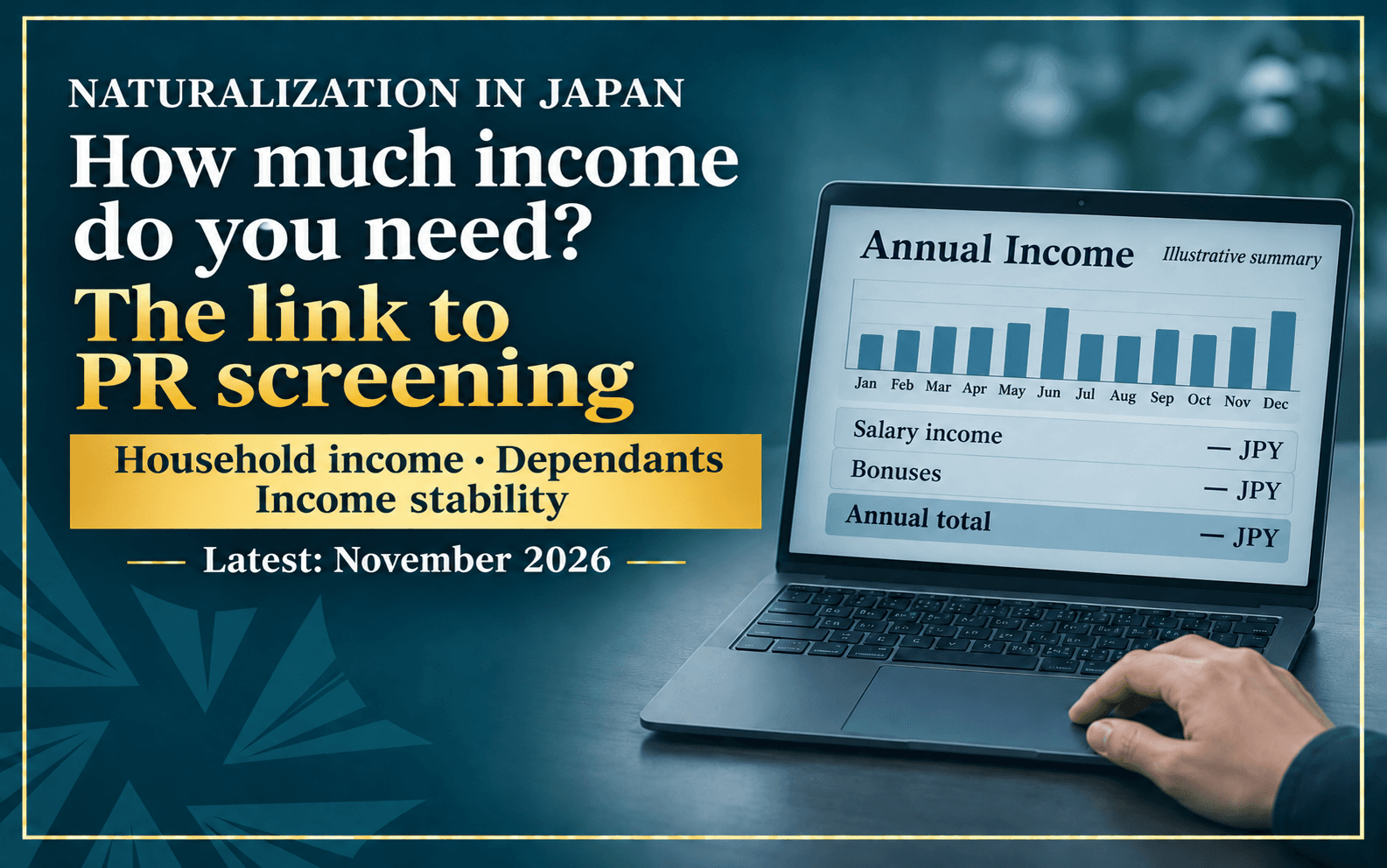
Change 1: Household income will be compared with Japanese household income levels
One of the most significant changes is the clearer approach to financial stability.
Under the new guidelines, Immigration will generally consider whether the applicant’s household income has continuously reached a level exceeding the average income of Japanese households of a comparable household size.
The assessment is generally conducted on a household basis.
Accordingly, income earned by a spouse or another member who lives with the applicant and shares household finances may be taken into account in appropriate cases.
However, income earned through permission to engage in activities outside the status of residence by a person holding a status such as “Dependent” will generally not be included in household income.
Dependants living outside Japan may also affect the calculation if they are financially supported by the applicant.
As a result, Permanent Residence should no longer be viewed through a simple rule such as “JPY 3 million per year is enough.”
Household size, dependants, the spouse’s residence status and the nature of each person’s income may all matter.
Importantly, these revised income considerations are already being applied to applications filed from April 1, 2026.
Change 2: Future pension income becomes part of the assessment
The revised guidelines also provide a more detailed approach to future pension income.
Immigration may consider factors such as the applicant’s age, pension enrolment history, employment history, past income and current income when assessing the amount of pension that may be available in the future.
Even where the expected pension amount falls below the relevant level, financial assets capable of covering the expected shortfall may be taken into consideration.
This may be particularly important for self-employed applicants, people with long periods of National Pension coverage only, applicants with frequent job changes, and people with complicated Japanese and overseas employment histories.
Change 3: Extended periods outside Japan are given clearer thresholds
Continuous residence in Japan has always been important for Permanent Residence.
Under the revised guidelines, the treatment of lengthy overseas stays is more clearly defined.
Looking back over the 10 years before the application, an applicant may generally receive a negative assessment where, without a reasonable explanation:
・one period outside Japan lasted six months or longer; or
・the total time outside Japan reached two years and six months or more.
These thresholds do not mean that spending six months abroad automatically results in refusal.
Overseas assignments, business requirements, medical treatment, family care and other reasonable circumstances may still be considered.
The key question is whether Japan continued to be the applicant’s genuine base of life.
Change 4: Japanese ability at approximately B1 level becomes a consideration
From April 2027, Japanese-language ability will expressly become one of the factors considered in Permanent Residence applications.
The guideline refers to approximately B1 level under Japan’s Framework of Reference for Japanese Language Education.
Broadly speaking, this is a level at which a person can function with a reasonable degree of independence in everyday and social situations using Japanese.
However, B1 will not necessarily be required from every applicant.
The guidelines identify circumstances where it may not be appropriate to require the applicant personally to demonstrate B1-level ability, including certain highly skilled professionals and their families, people who have completed a sufficient period of elementary or lower-secondary education in Japan, and certain children of permanent residents born in Japan.
Therefore, the change should not be understood as a universal rule that “you must pass a particular Japanese examination to obtain Permanent Residence.”
Change 5: Understanding Japanese systems and rules will be assessed
The revised guidelines also expressly refer to an applicant’s understanding of Japan’s systems and social rules.
Immigration will assess whether the applicant has an adequate understanding of matters primarily covered by the government’s Living and Work Guidebook, using a method designated by the Commissioner of the Immigration Services Agency.
This may include basic matters concerning taxes, social insurance, immigration procedures, employment and everyday rules in Japan.
Applicants should check the latest official procedure in effect at the time of filing, as the practical method of confirming this knowledge may develop further.
Change 6: School attendance of compulsory-school-age children becomes relevant
Where an applicant is raising a child of compulsory-school age, the child’s attendance at elementary or junior high school will become an explicit consideration.
Where the applicant is themselves of compulsory-school age, their own school attendance will be considered.
This reflects a broader focus on whether the applicant and their family are genuinely integrated into long-term life in Japan.
Families using international or foreign schools, or those with unusual educational circumstances, should confirm how their individual situation will be treated before filing.
Change 7: The special rules for spouses and children become stricter
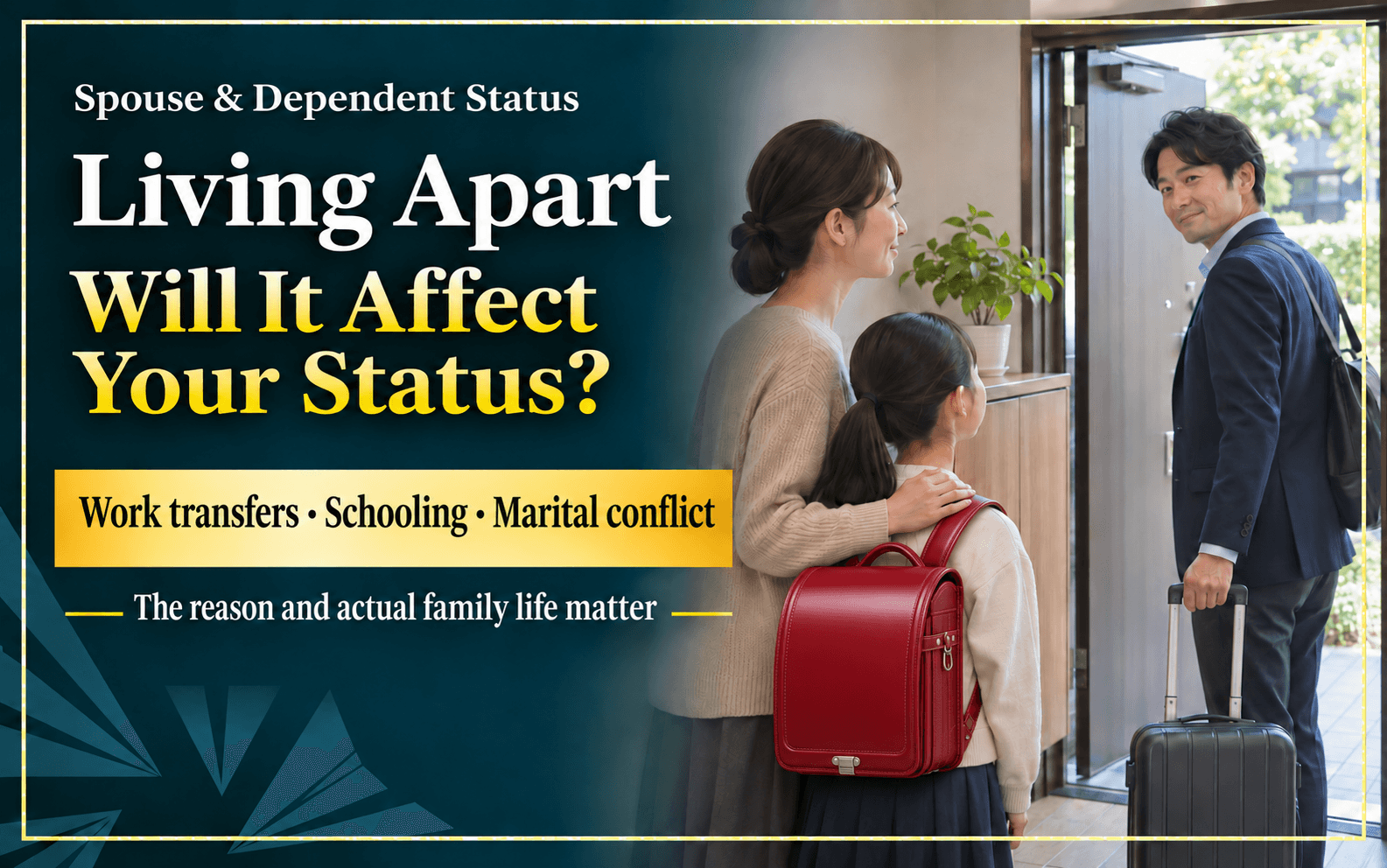
Under the current guidelines, a spouse of a Japanese national, permanent resident or special permanent resident may qualify for an exception to the general 10-year residence rule where the genuine marriage has continued for at least three years and the applicant has continuously lived in Japan for at least one year.
For qualifying biological children and similar cases, the current requirement is generally at least one year of continuous residence in Japan.
From April 1, 2027, the revised guidelines change the spouse requirement to:
at least five years of genuine marriage and at least three continuous years of residence in Japan.
The residence requirement for qualifying children will also generally become three years.
This change may be particularly important for people currently holding “Spouse or Child of Japanese National” or “Spouse or Child of Permanent Resident” status who are close to meeting the existing rules.
Filing before or after April 1, 2027 may produce a very different eligibility result.
The treatment of a 3-year period of stay will also change
At present, a person holding a 3-year period of stay may still be treated as satisfying the requirement to hold the maximum period of stay for Permanent Residence purposes.
That general treatment continues through March 31, 2027.
Transitional measures exist after April 1, 2027, but not every holder of a 3-year period will automatically continue to receive the same treatment.
Applicants holding a 3-year period of stay should therefore carefully check their expiration date, previous application history and planned filing date.
Waiting until April 2027 is not necessarily better
The revised guidelines clarify and, in several areas, tighten the Permanent Residence assessment.
Applicants who already satisfy the current requirements should therefore not automatically assume that waiting for the new system will be advantageous.
For some people, filing before April 1, 2027 may be more favorable.
For others, weaknesses involving income, taxes, pension contributions, residence periods or overseas stays may mean that more preparation is appropriate before filing.
The best filing date depends on which set of guidelines applies and how the applicant’s individual history fits those standards.
Frequently Asked Questions (FAQ)
Q1. Did all Permanent Residence requirements change in October 2026?
No. Applications filed between April 1, 2026 and March 31, 2027 generally remain subject to the February 24, 2026 guidelines, although the revised income provisions are already being applied. The new guidelines generally apply in full from April 1, 2027.
Q2. Will passing a Japanese-language test become mandatory from April 2027?
The revised guidelines use approximately B1-level Japanese ability as a consideration, but they do not simply state that every applicant must pass one specific examination. There are also circumstances where the applicant’s personal B1-level ability may not be required.
Q3. Does spending more than six months outside Japan automatically result in refusal?
No. The revised guidelines state that an unexplained single absence of six months or more, or total absences of two years and six months or more during the previous 10 years, will generally be assessed negatively. Reasonable explanations such as overseas assignments or family circumstances may still be considered.
Q4. I have been married to a Japanese national for more than three years. Can I still apply after April 2027?
The revised guideline changes the spouse exception to generally require at least five years of genuine marriage and at least three continuous years of residence in Japan. The timing of your application may therefore materially affect eligibility.
Q5. Should I file before April 2027?
It depends on your circumstances. Filing earlier may benefit applicants who already satisfy the current rules and would face stricter requirements under the new guidelines. However, applicants with issues involving income, tax, pension or residence history may benefit from additional preparation.
Conclusion
The October 1, 2026 revision represents one of the most important recent changes to Japan’s Permanent Residence assessment framework.
From April 2027, Immigration will expressly consider a broader range of factors, including household income, pension prospects, Japanese-language ability, understanding of Japanese systems and rules, extended overseas stays, and children’s school attendance.
The special residence-period rules for spouses and children of Japanese nationals and permanent residents will also become stricter.
At the same time, as of November 2026, the entire new guideline is not yet applicable. The revised income standards, however, are already being used for applications filed from April 1, 2026.
A difference of only a few months in filing date may therefore significantly affect eligibility.
Consult us about Permanent Residence
Enlight Administrative Scrivener Office can review your current residence status, residence history, household income, dependants, tax and pension history and overseas travel record to assess whether filing now or after April 2027 is more appropriate.
Initial eligibility assessment is free.
Please contact us if you are unsure about the timing of your Permanent Residence application.
Enlight Administrative Scrivener Office
Administrative Scrivener 宮島 詩卉
Telephone: 03-5284-7981
Office hours: Weekdays 10:00–18:00
※Our Permanent Residence application support generally covers areas under the jurisdiction of the Tokyo Regional Immigration Services Bureau.
Free consultation and enquiries
References
Immigration Services Agency of Japan, “Guidelines for Permanent Residence — Revised October 1, 2026”
Ministry of Justice, “Press Conference by the Minister of Justice — October 2, 2026”
※This article is based on official information available as of November 2026. Permanent Residence applications are assessed individually and comprehensively, and similar factual circumstances do not necessarily produce the same result.