Column
Permanent Residence for Business Owners in Japan: New Business Manager Rules, Taxes, and Social Insurance 【2026 Update】
“I have held Business Manager status for years. Can I apply for PR?”
“My current status keeps being renewed, but my company does not have ¥30 million in capital.”
“My company once paid social-insurance contributions late.”
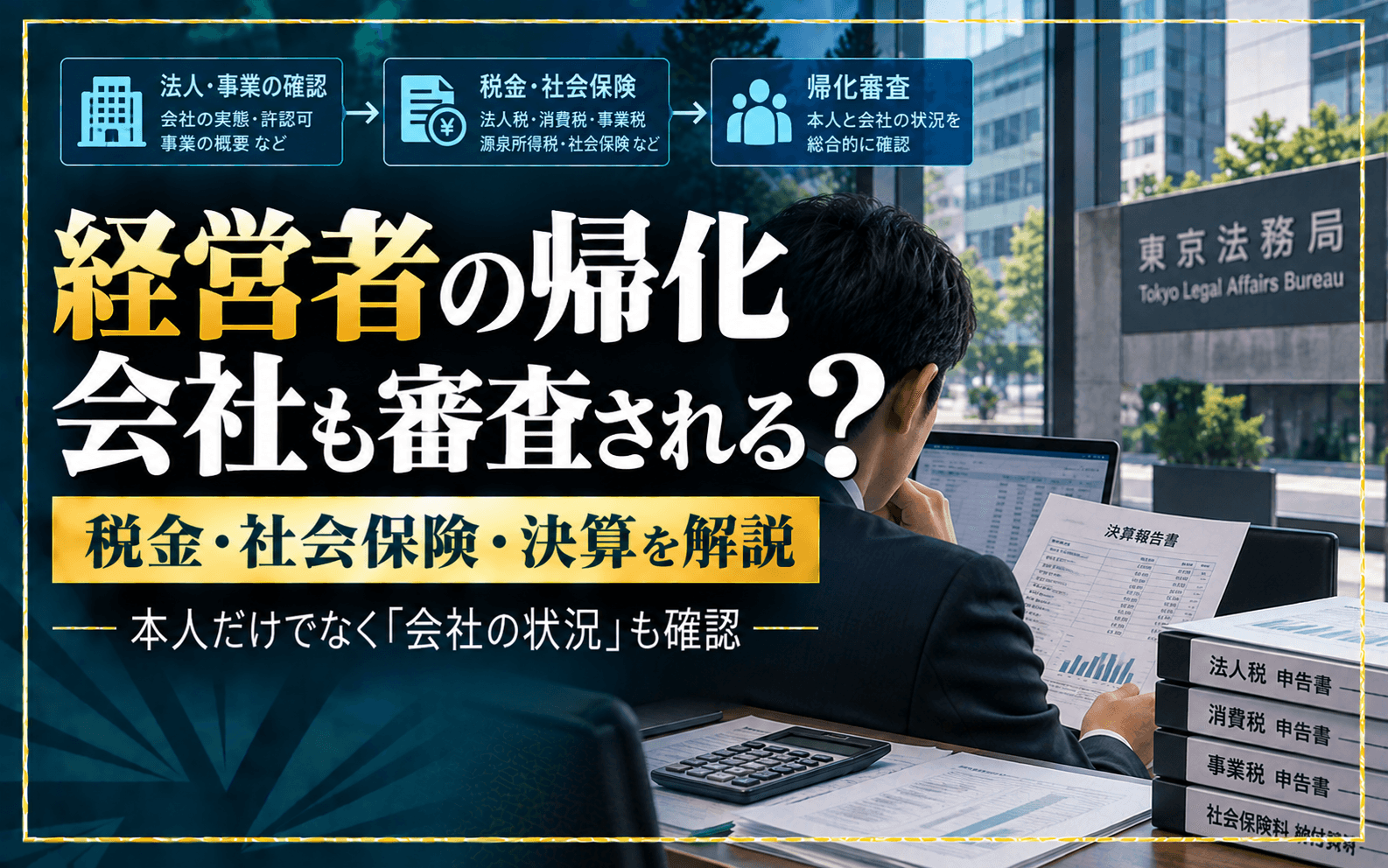
Business-owner Permanent Residence cases require review of both:
the applicant
and
the business itself.
The Revised Business Manager Criteria Are Now Critical for PR
Japan substantially revised the Business Manager criteria on October 16, 2025.
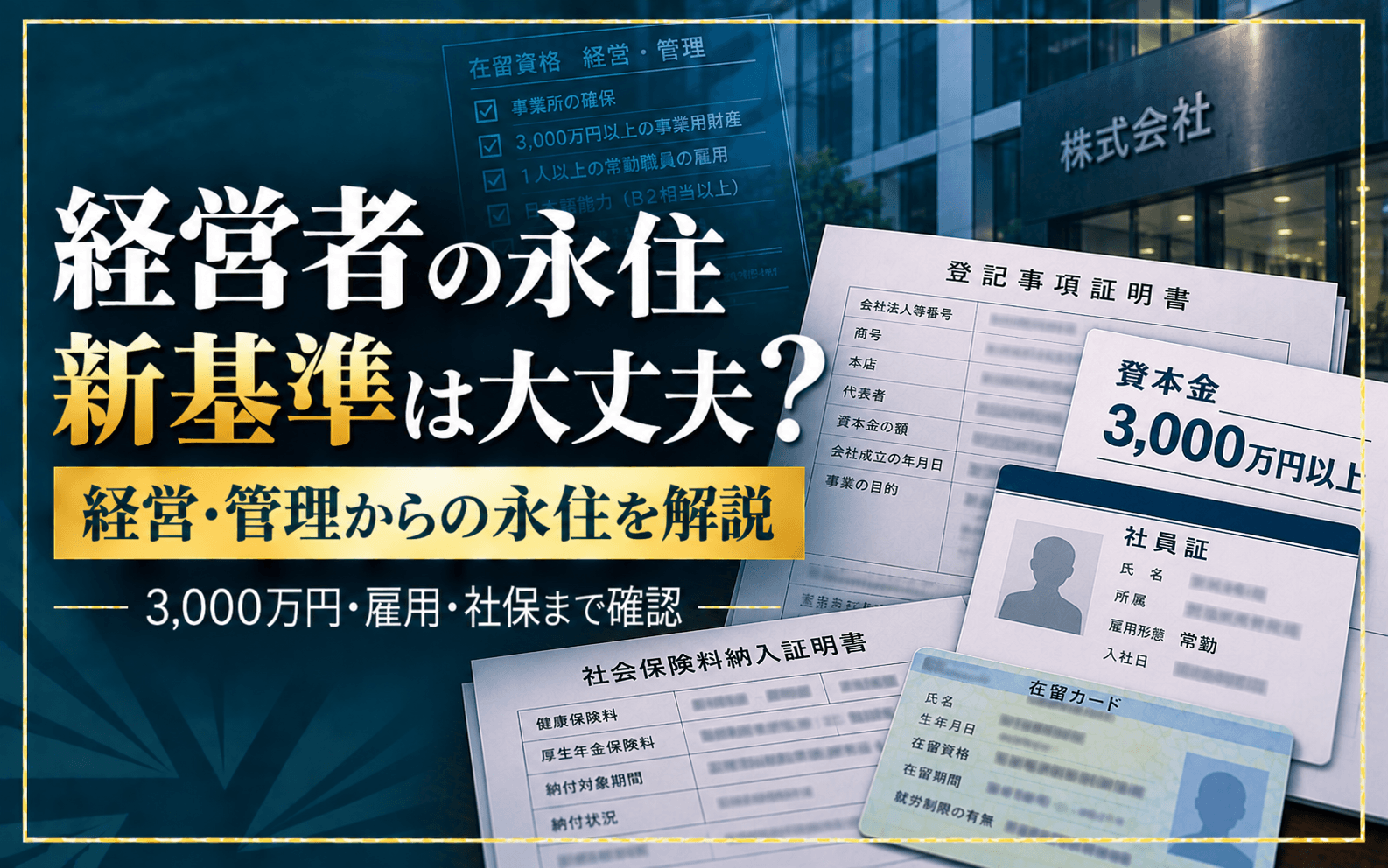
The revised framework includes matters such as:
A genuine business office in Japan
At least one qualifying full-time employee
At least ¥30 million in qualifying business assets
B2-equivalent Japanese ability held by the manager or a qualifying employee
Relevant master’s-level education or at least three years of management experience
These criteria now have a direct impact on Permanent Residence.
1. A Renewable Business Manager Status Does Not Automatically Mean PR Eligibility
Existing Business Manager holders have transitional treatment for extensions.
For a period after the reform, an extension may still be considered even where every new criterion has not yet been fully met.
Permanent Residence is different.
The Immigration Services Agency expressly states that, from October 16, 2025, Permanent Residence based on Business Manager status will not be granted where the revised Business Manager criteria are not satisfied.
Accordingly:
valid Business Manager status does not automatically establish PR eligibility.
Check Compliance With the New Criteria Before the Ordinary PR Requirements
Business owners should first determine whether their current business satisfies the revised immigration criteria.
Residence length and tax compliance alone are not enough.
2. ¥30 Million in Business Assets
For corporate entities, the relevant figure generally concerns paid-in capital or total contributions.
It is not simply:
Annual sales
Cash in the bank
Company valuation
For sole proprietors, the concept is different because there is no corporate capital.
The authorities look to the amount actually invested in the business, potentially including business premises, employee salary costs, and equipment.
3. At Least One Qualifying Full-Time Employee
The revised criteria require at least one qualifying full-time employee.
The employment criterion generally recognizes persons such as:
Japanese nationals
Special Permanent Residents
Permanent Residents
Spouses or Children of Japanese Nationals
Spouses or Children of Permanent Residents
Long-Term Residents
An employee holding an ordinary activity-based work status does not by themselves satisfy this particular employment criterion.
4. Japanese-Language Ability
The business manager or an eligible employee must meet a B2-equivalent Japanese-language level.
Official examples for foreign nationals include JLPT N2 or above and BJT 400 or above, as well as certain long-residence or Japanese-education backgrounds.
5. Management Experience or Graduate Education
The applicant generally needs either:
at least three years of relevant management experience
or
a master’s-level or higher degree relating to management or the business field.
Genuine Management Activity Still Matters
Formal company registration is not enough.
The applicant needs to genuinely participate in management activities.
A structure in which the business is effectively operated by third parties while the applicant has little real management involvement can create immigration-status concerns.
6. Home-and-Office Arrangements Require Care
Current Business Manager guidance generally does not accept a residence being used together as the business office under the revised scale of the system.
Existing business owners using a home office should therefore review this point carefully.
Business Owners Must Review More Than Personal Taxes
An employee PR case focuses heavily on the individual.
For business owners, company-level compliance also matters.
7. Company Social Insurance: Generally Two Years
Where the applicant is the employer of a workplace covered by employee social insurance, PR documentation generally includes evidence of the company’s Employees’ Pension and health-insurance payments for the relevant two-year period.
The authorities are interested not only in whether everything is paid today, but also whether payments were made by the proper deadlines.
Cash-Flow Problems Do Not Automatically Separate From the PR Case
Late company social-insurance payments caused by cash-flow difficulties can still be relevant to a business owner’s Permanent Residence case.
8. Employment Law, Insurance, and Business Licenses Matter
Immigration also considers whether a Business Manager complies with obligations such as:
Labor law
Minimum-wage rules
Social insurance
Employment insurance
Workers’ compensation insurance
Required business licenses
Paying corporate tax alone does not resolve every Business Manager issue.
Does One Loss-Making Year Prevent PR?
No nationwide rule states that one loss-making year automatically results in refusal.
However, recurring losses, insolvency, declining revenue, or an inability to sustain the owner’s remuneration can raise concerns about both business continuity and stable livelihood.
9. Company Revenue Is Not the Same as the Owner’s Income
A company may generate substantial revenue while paying the representative only a low director’s salary.
Permanent Residence also looks at the applicant’s personal financial stability.
Raising Director Compensation Immediately Before PR Does Not Automatically Solve the Issue
The current figure needs to make sense alongside past income, company performance, tax filings, and financial condition.
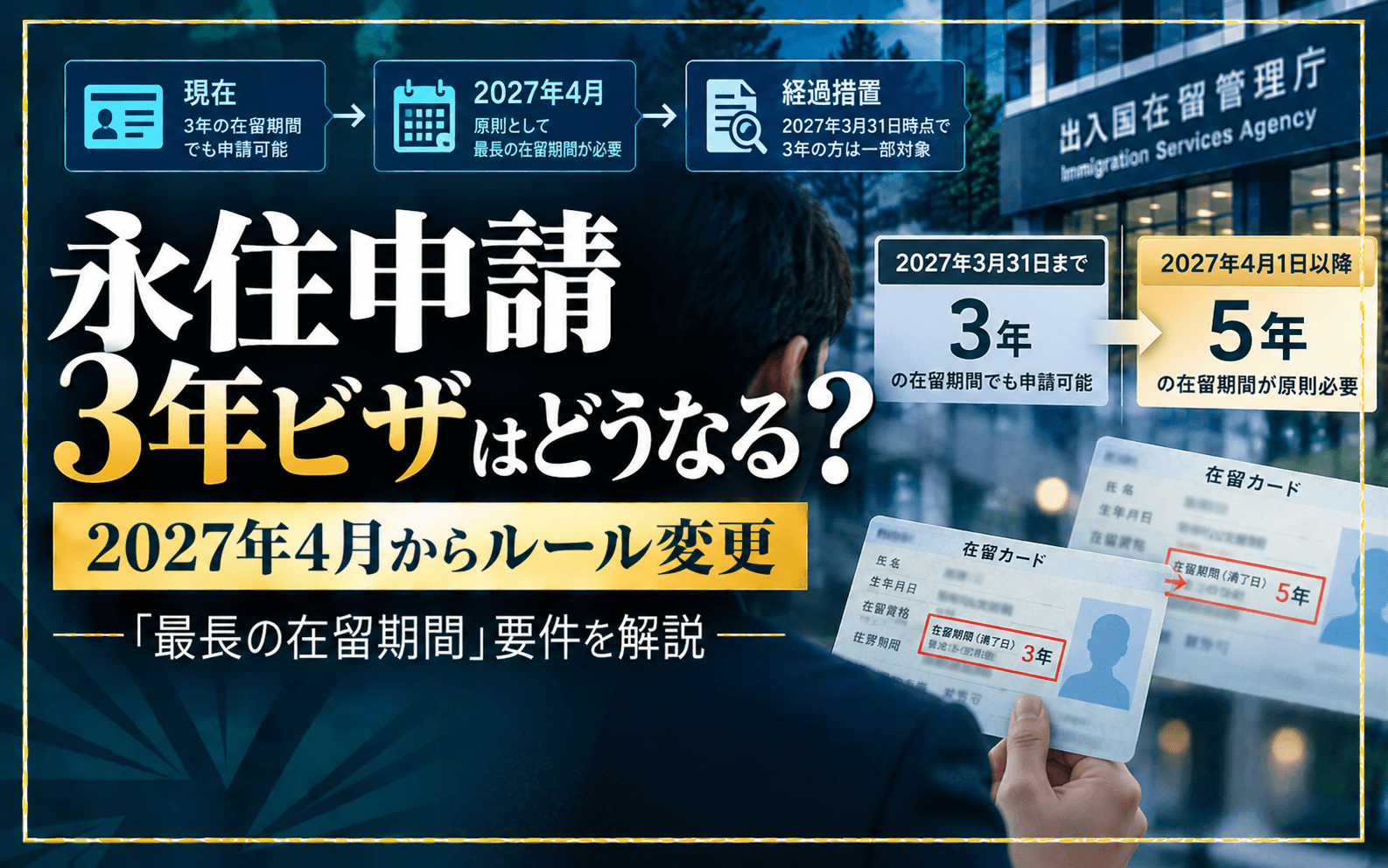
10. Personal Resident Tax Is Still Generally Reviewed for Five Years
Business Manager is a work-related status.
Under the ordinary PR route, the applicant’s resident-tax income history is generally reviewed over the most recent five years.
11. The Ordinary 10-Year / 5-Year Residence Rule Still Applies
Business ownership does not itself remove the ordinary residence-duration requirement.
The general route still normally requires 10 years in Japan, including five years under an eligible work or residential status.
Highly Skilled Routes May Shorten the Period—but Do Not Bypass Business Manager Rules
A qualifying business owner may potentially use the 70-point three-year route or 80-point one-year route.
However, where the highly skilled activity is based on Business Manager activity, the revised Business Manager requirements still apply.
An 80-point score does not replace those criteria.
12. Long Periods Abroad Can Also Matter
A business located in Japan does not automatically establish that the applicant has genuinely continued management activity in Japan.
Long or unexplained periods abroad can therefore require closer review.
Cases That Particularly Deserve Pre-Filing Review
This includes applicants who:
Obtained Business Manager status before the October 2025 reform
Have capital below ¥30 million
Do not employ a qualifying full-time worker
Employ only foreign workers under activity-based work statuses
Are unsure who satisfies the Japanese-language requirement
Are unsure about the education/experience requirement
Use a home as the business office
Have late company social-insurance payments
Operate a loss-making or insolvent company
Receive relatively low director compensation
Have late corporate tax or consumption-tax payments
Spend substantial time abroad
Plan to use the 80-point HSP route
Frequently Asked Questions
Q. My Business Manager Status Is Still Being Renewed. Can I Apply for PR?
Not necessarily. Extension transitional measures and Permanent Residence eligibility are different.
Q. I Originally Obtained Business Manager Status With ¥5 Million in Capital.
Current PR planning requires review under the revised criteria.
Q. Does ¥30 Million Mean Annual Revenue?
No. For corporations, the key concept generally concerns capital or total contributions.
Q. I Employ One Person.
Their employment status and eligibility under the revised rule need to be checked.
Q. I Do Not Have JLPT N2.
A qualifying employee may be able to satisfy the Japanese-language element depending on the circumstances.
Q. My Company Paid Social Insurance Late.
The timing of company payments during the relevant period should be reviewed.
Q. My Company Had One Loss-Making Year.
There is no automatic one-year-loss refusal rule, but the overall business condition matters.
Q. I Have 80 HSP Points.
The one-year route may be available, but revised Business Manager criteria still matter where the activity is management-based.
A Business-Owner PR Case Requires Review of Both the Person and the Company
For an employee, the focus is largely on personal employment, income, taxes, pension, and residence history.
For a business owner, the assessment also involves:
business reality, revised Business Manager criteria, company social insurance, legal compliance, and business continuity.
Enlight Administrative Scrivener’s Office reviews both the applicant and the company—including the post-2025 Business Manager criteria, capital, staffing, Japanese ability, management experience, tax history, company social insurance, and HSP points—before deciding whether the PR application should proceed.
The initial Permanent Residence eligibility check is free of charge.
Permanent Residence support is generally limited to applicants within the jurisdiction of the Tokyo Regional Immigration Services Bureau.
References
Immigration Services Agency: Revision of the Landing Criteria for Business Manager Status
Immigration Services Agency: Status of Residence — Business Manager
Immigration Services Agency: Guidelines for Permission for Permanent Residence
Immigration Services Agency: Permanent Residence Application 3
Immigration Services Agency: Overview of Required Documents for Work-Status Permanent Residence Applications