Column

Column
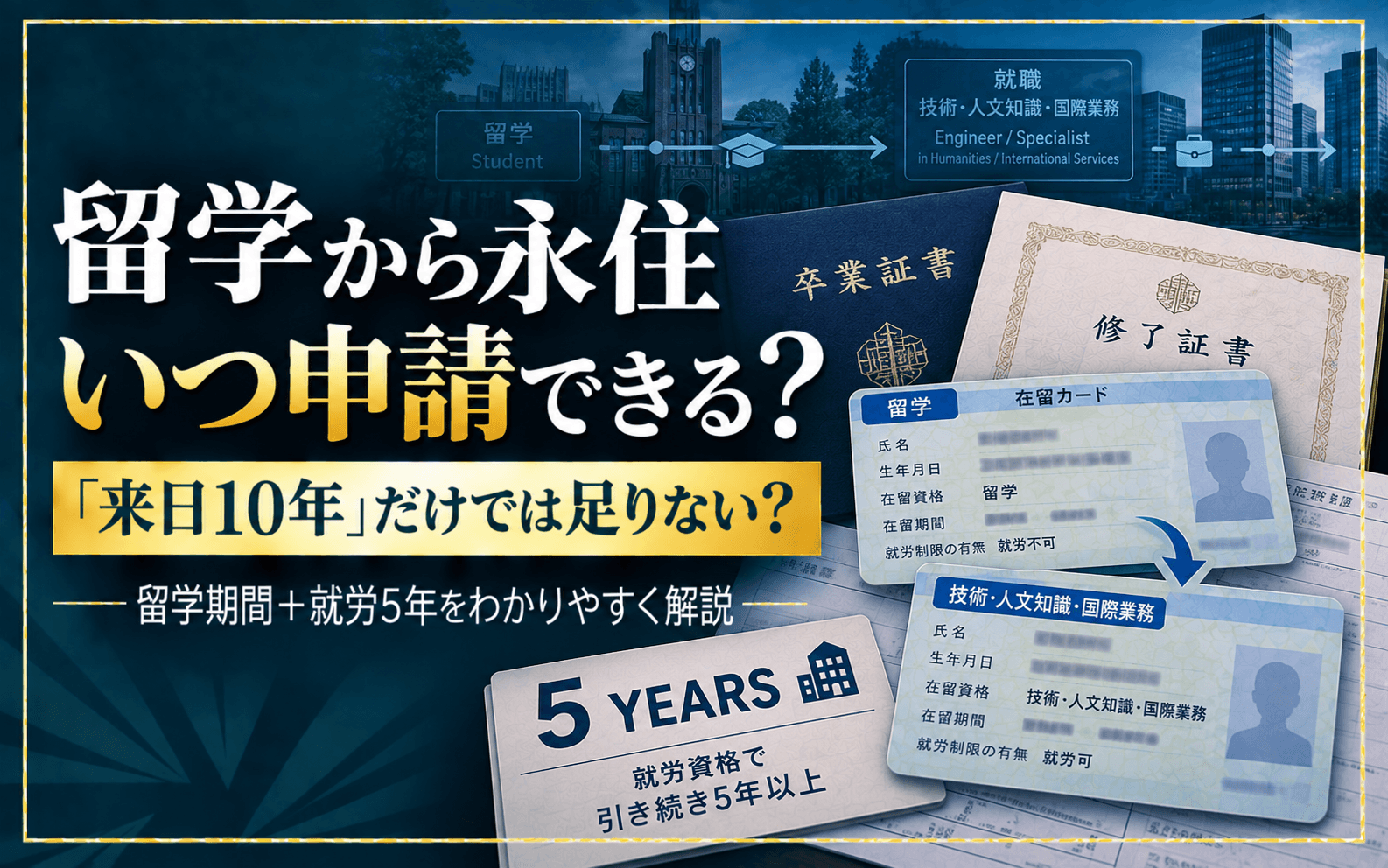
“I have lived in Japan for more than ten years including university. Can I apply for PR?”
“I graduated from graduate school but have only worked for four years.”
“Does six years as a student plus four years as an employee equal ten years for PR?”
The key point is:
the ordinary PR route does not look only at the total 10 years.
Applicants generally also need:
at least five consecutive years under an eligible work or residential status.
Student Years Can Count Toward the 10 Years, but Normally Not the Five-Year Work/Residential Requirement
The ordinary framework effectively requires both:
1. At least 10 consecutive years in Japan
and
2. At least five consecutive years during that period under an eligible work or residential status.
For example:
Student: 5 years
Engineer/Specialist in Humanities/International Services: 5 years
may satisfy the duration component.
But:
Student: 6 years
Engineer/Specialist in Humanities/International Services: 4 years
totals ten years while still falling short of the ordinary five-year work/residential-status component.
The tenth anniversary of arrival is therefore not necessarily the PR filing date.
Student status covers study at Japanese educational institutions.
Those years can form part of the overall residence history in Japan.
However, Student is not itself one of the ordinary qualifying work or residential statuses for the five-year component.
Check the Immigration-Status Dates, Not Only the Employment Start Date
A person may begin work on April 1 but receive permission to change from Student to a work status later in April.
For PR timing, the actual immigration-status history should be checked rather than relying only on the number of years since joining the company.
This is one of the most common statuses obtained by international graduates.
Time lawfully spent under it can count toward the five-year work-status requirement.
Other PR requirements—including tax, pension, income, conduct, and compliance with the current status—still remain.
Does Dependent Status Count Toward the Five Years?
Generally not as an ordinary qualifying work or residential status for this requirement.
A person may have ten total years in Japan while still lacking five years under the required categories.
Statuses such as:
Spouse or Child of Japanese National
Spouse or Child of Permanent Resident
Long-Term Resident
are residential statuses based on status or position rather than a particular work activity.
Their periods can be relevant to the ordinary five-year work/residential requirement.
They may also have separate exceptions that shorten the general ten-year requirement, so applicants should check those routes first.
Technical Intern Training Does Not Count Toward the Five-Year Work Requirement
The Permanent Residence guidelines expressly exclude:
Technical Intern Training
from the qualifying five-year work-status period.
Five years of actual work does not necessarily mean five qualifying years for PR.
The guidelines also expressly exclude:
Specified Skilled Worker (i).
Accordingly, five years under SSW(i) does not by itself satisfy the ordinary PR five-year work-status requirement.
Specified Skilled Worker (ii) Is Different
The Immigration Services Agency states that time under:
Specified Skilled Worker (ii)
can count as qualifying work-status residence for Permanent Residence purposes.
SSW(i) and SSW(ii) therefore need to be distinguished.
Designated Activities Depends on the Specific Activity
“Designated Activities” is not one uniform category for PR purposes.
Whether it counts depends on the individual activity designated to the foreign national.
The Immigration Services Agency identifies qualifying examples such as:
Designated Activities No. 46 for graduates of Japanese universities
Certain specified research activities
Certain information-processing activities
EPA nurses and certified care workers
By contrast, examples that do not qualify include:
Working Holiday
Internship
EPA nurse/care-worker candidate periods
The designated activity itself therefore needs to be checked.
Can Different Qualifying Work Statuses Be Combined?
A person might spend:
two years under Engineer/Specialist in Humanities/International Services
followed by:
three years under Business Manager.
The guideline requires five consecutive years under qualifying work or residential statuses; it does not necessarily require one identical work status for the entire five years.
The actual status history and activities should still be reviewed carefully.
Does Changing Employers Reset the Five Years?
A job change alone does not automatically reset the entire qualifying period.
However, a job change may create other PR issues involving:
Immigration notifications
Pension
Health insurance
Resident tax
Whether the new duties fit the current immigration status
What About a Period of Unemployment?
There is no simple published rule stating that any unemployment automatically erases all prior qualifying time.
The duration, reason, job-search circumstances, immigration status, and subsequent employment can matter.
Long periods without the authorized activity should be reviewed carefully.
Does Part-Time Work While on Student Status Count?
No.
Even where a student had permission for activities outside the status and worked part time, the underlying immigration status remained:
Student.
Part-time work does not convert the Student period into qualifying work-status residence for this PR requirement.
Long Student Histories Make the Highly Skilled Route Particularly Important to Check
Consider an applicant with:
Student: 6 years
Work status: 3 years
The ordinary route has not yet reached either the ten-year total or five-year work-status requirement.
However, the applicant may have sufficient Highly Skilled Professional points based on:
Education
Age
Income
Professional experience
Japanese ability
The HSP exceptions can reduce the ordinary residence requirement to:
three years at 70 points
or
one year at 80 points
when all applicable conditions are met.
Graduates of Japanese Universities and Graduate Schools Should Check HSP Points
International graduates may obtain HSP points through factors such as:
Master’s or doctoral degree
Graduation from a Japanese institution
JLPT N1 or qualifying N2
Age
Income
An applicant who appears to need two more years under the ordinary route may therefore have an earlier HSP route available.
Five Years of Work Status Is Not the Only Issue
Even after reaching the qualifying residence period, ordinary work-status PR applications also generally involve review of matters such as:
Five years of resident-tax records
Two years of pension and public health-insurance records
Graduates may also have Student Pension Payment Special System periods, National Health Insurance, or social-insurance transitions around their first job.
PR timing should therefore be assessed across the whole file rather than from the qualifying anniversary alone.
What About the Student Pension Payment Special System?
A formally approved student payment special arrangement is different from simply failing to pay National Pension without taking the required procedure.
The actual pension record and relevant review period should be checked before filing.
Cases That Particularly Deserve Pre-Filing Review
This includes applicants who:
Spent five or more years as a student
Have reached ten years in Japan but worked for less than five
Spent many years in graduate school
Do not know the exact date their work status began
Changed employers
Had unemployment periods
Temporarily held Dependent status
Have Technical Intern Training or SSW(i) history
Previously held Designated Activities
Are close to 70 or 80 HSP points
Are concerned about pension records from student years
Frequently Asked Questions
From the residence-duration perspective, that may satisfy the ordinary 10-year plus five-year requirement, subject to all other PR conditions.
Under the ordinary route, the qualifying work/residential-status period is normally still short of five years.
An HSP exception may be worth checking.
No.
Generally not toward the ordinary five-year qualifying work/residential-status requirement.
The current guideline expressly excludes it.
It is also expressly excluded.
The Immigration Services Agency states that SSW(ii) periods can count.
The specific designated activity must be checked.
You may be able to consider the one-year HSP route, but the score at the relevant point one year earlier also matters.
International Graduates Should Not Decide PR Timing From “Ten Years Since Arrival” Alone
For a typical progression of:
university
↓
graduate school
↓
employment in Japan,
the ten-year residence point and the five-year qualifying work/residential-status point often occur on different dates.
At the same time, a Highly Skilled route may allow an earlier application.
Enlight Administrative Scrivener’s Office can review the complete residence history, Student period, work-status change date, job changes, unemployment, Technical Intern Training, Specified Skilled Worker, Designated Activities, HSP points, taxes, pension, and health insurance to determine when a PR application can appropriately proceed.
The initial Permanent Residence eligibility check is free of charge.
Permanent Residence support is generally limited to applicants within the jurisdiction of the Tokyo Regional Immigration Services Bureau.
Immigration Services Agency: Guidelines for Permission for Permanent Residence, revised February 24, 2026
Immigration Services Agency: Status of Residence List
Immigration Services Agency: Designated Activities Treated as Work Statuses Under the Permanent Residence Guidelines
Immigration Services Agency: Specified Skilled Worker Q&A
Immigration Services Agency: Preferential Immigration Treatment Based on the Highly Skilled Professional Points System
Related
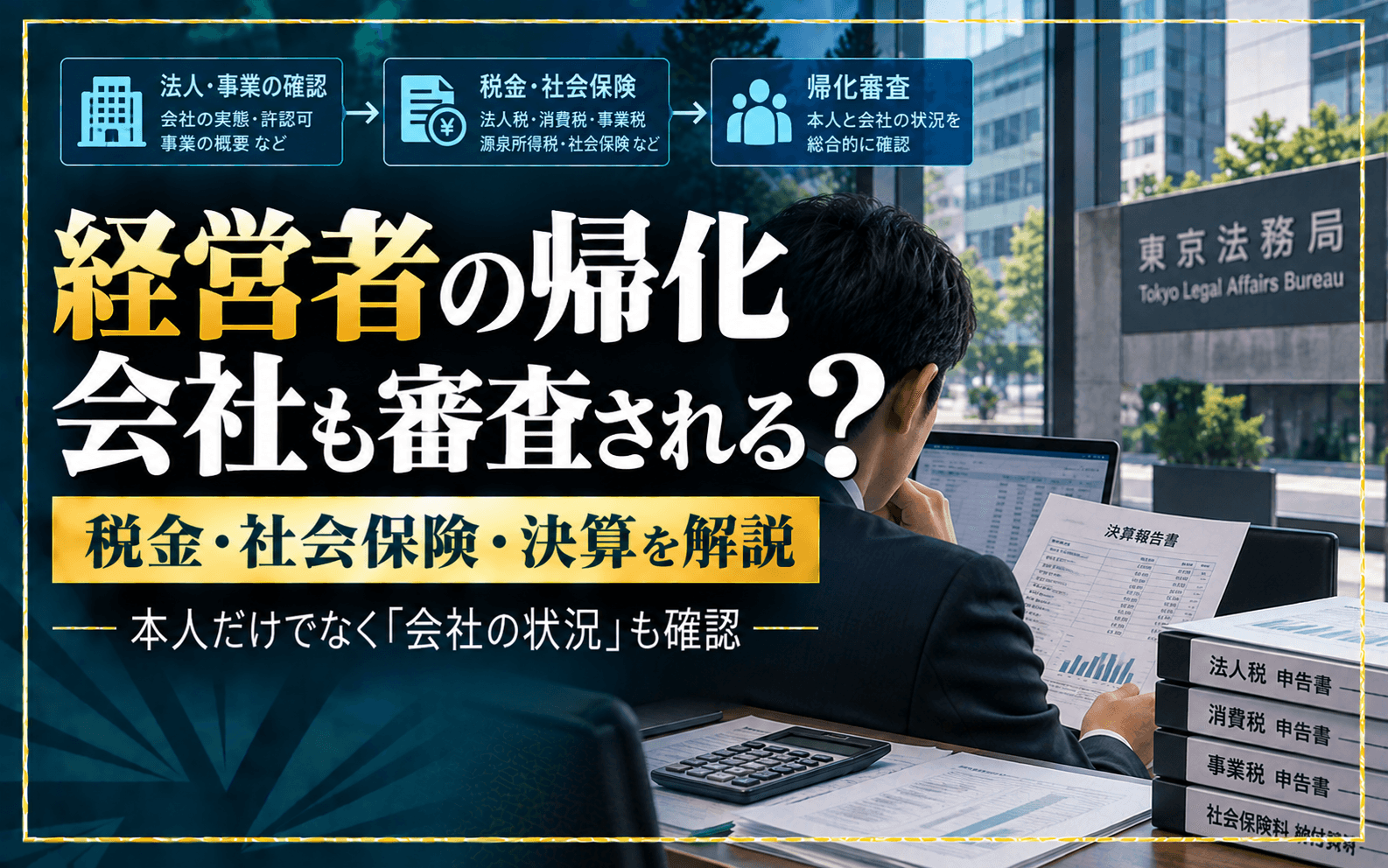
Can a company owner or sole proprietor apply for Japanese naturalization? Business-owner cases involve more than the applicant’s personal income and taxes. Corporate taxes, consumption tax, business tax, withholding tax, company social insurance, financial statements, licensing, and the actual business operation can also require review.
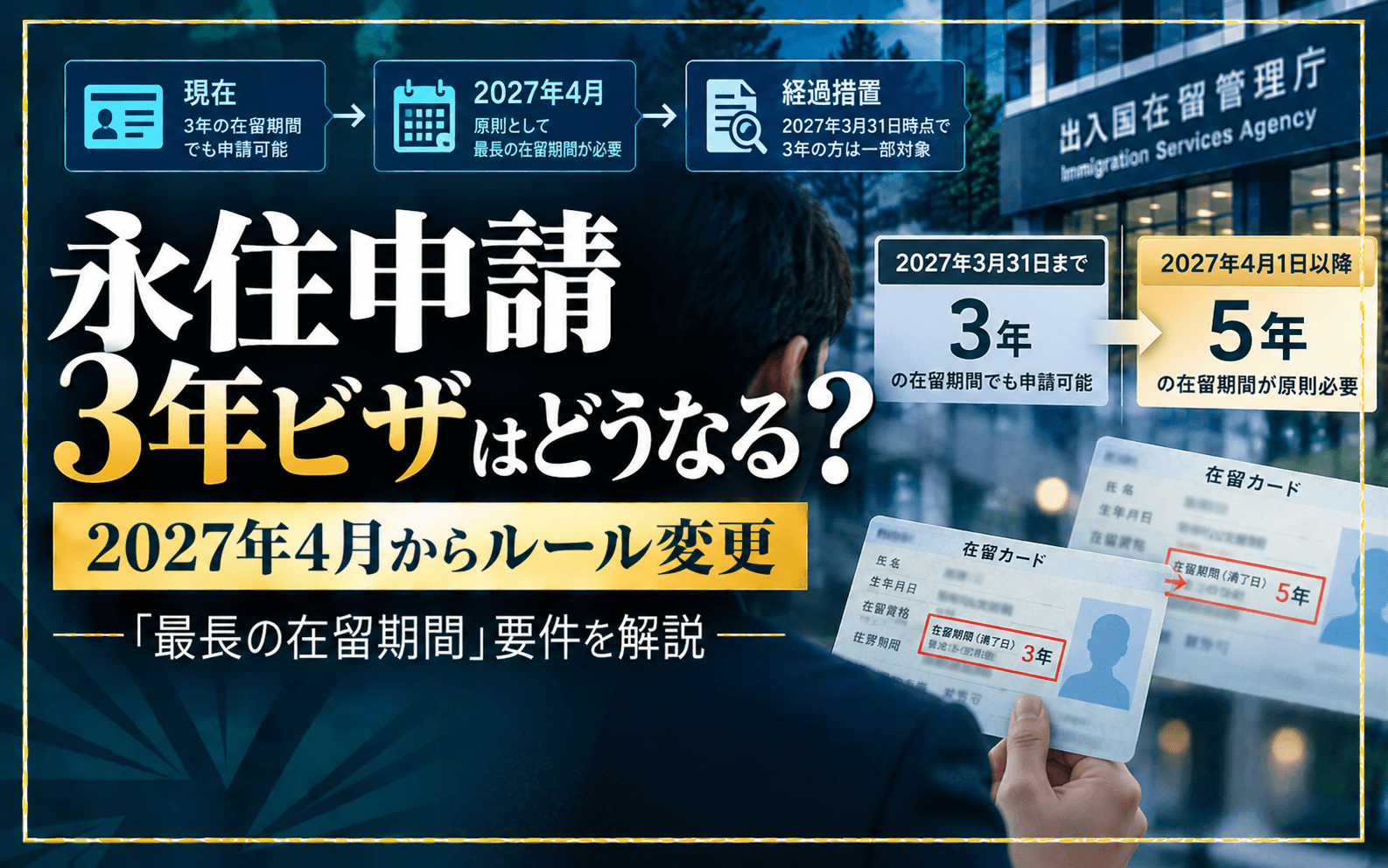
Read MoreA three-year period of stay can currently satisfy the “maximum period of stay” requirement for Japanese Permanent Residence, but the general transitional treatment ends on March 31, 2027. From April 2027, applicants will generally need the actual maximum period available for their current status. A separate transitional rule, however, applies to certain people who still hold a three-year period on March 31, 2027.
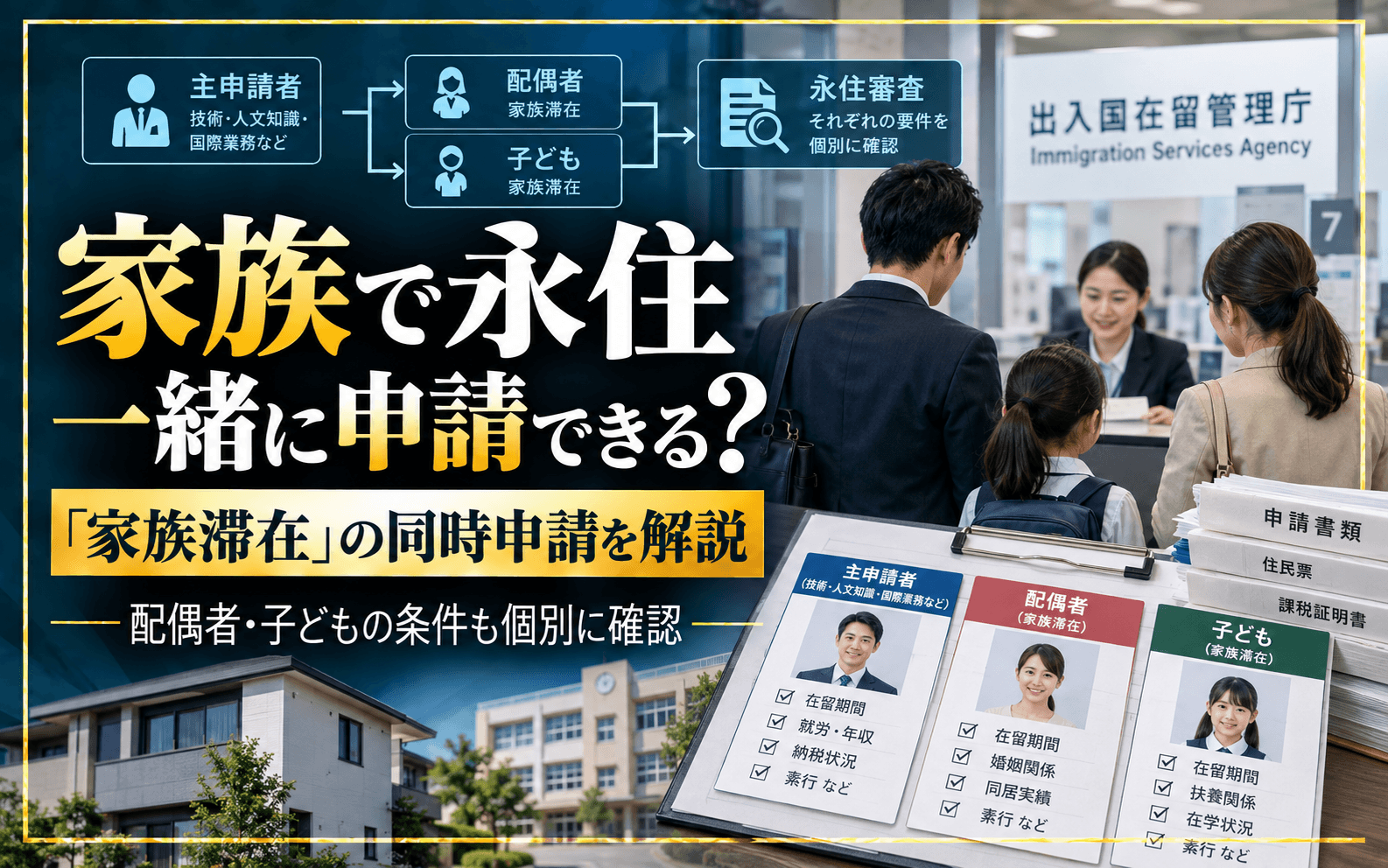
Read MoreWhen a work-status holder applies for Japanese Permanent Residence, can a spouse and children under Dependent status apply at the same time? Family applications require more than checking the principal applicant. Marriage duration, each child’s residence history, household income, taxes, pension, outside-status work, and overseas absences can all affect the appropriate filing strategy.
Read MoreLet's Start
Our scrivener carefully answers your visa and naturalization questions. Online consultations are available.