Column
Column
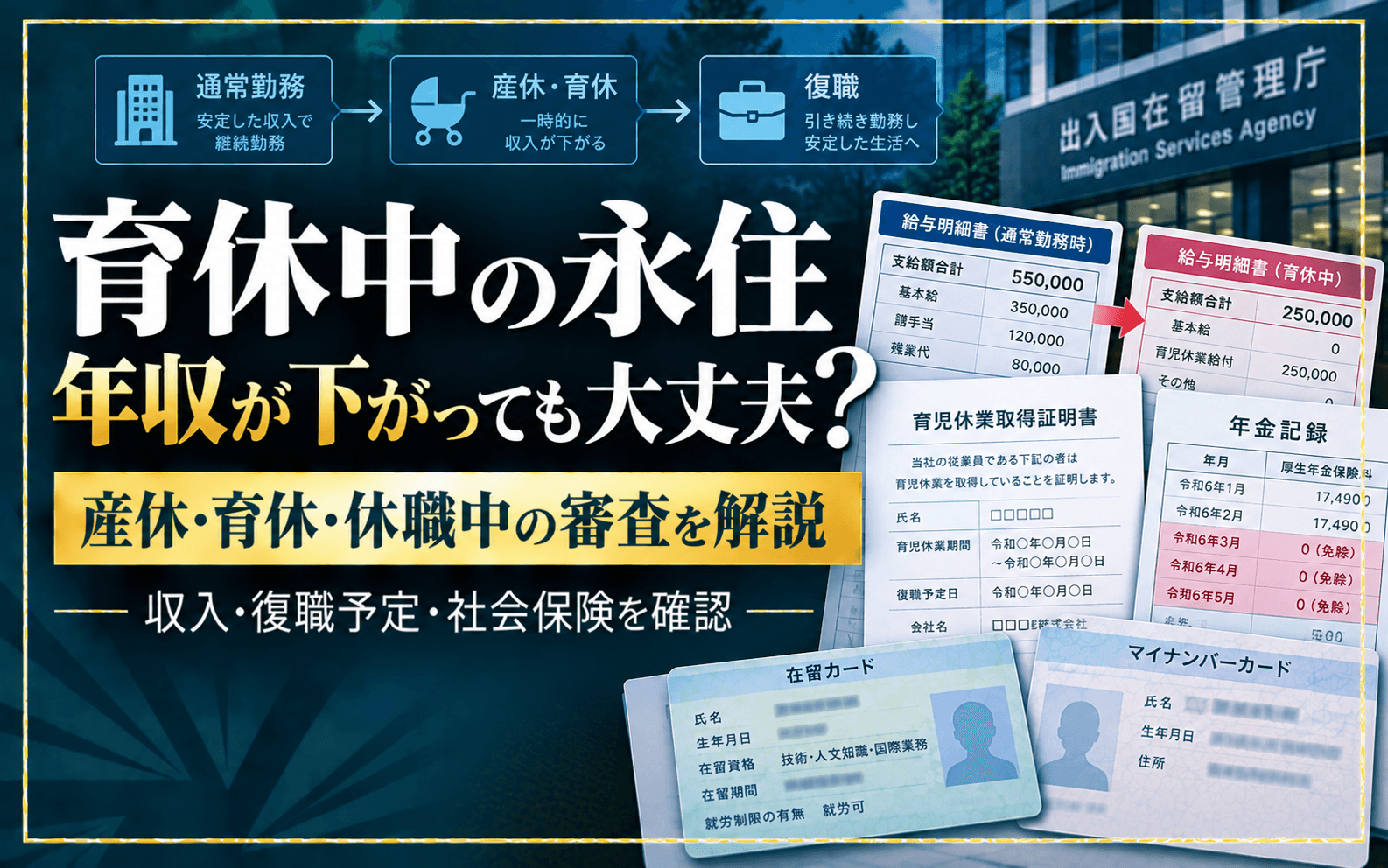
“I am currently on childcare leave. Can I apply for PR?”
“My annual income fell substantially because I had a baby.”
“My pension record shows zero contributions during childcare leave.”
There is no published nationwide rule stating that an applicant becomes ineligible for Permanent Residence merely because they are on maternity or childcare leave.
The important issue is the applicant’s overall situation.
Maternity or Childcare Leave Does Not Automatically Prevent Permanent Residence
The Permanent Residence framework considers whether a stable life in Japan can be expected in the future.
The assessment can therefore involve:
Income before leave
Continued employment
Expected return to work
Household income
Taxes
Pension and health insurance
Current immigration status
A temporary leave period should not automatically be treated in the same way as long-term unemployment.
A Lower Income During Childcare Leave Is Not Automatically Disqualifying
Consider an employee who normally earns ¥5.5 million but shows taxable income of only ¥2.5 million in the year affected by maternity and childcare leave.
The reason for the reduction matters.
A temporary statutory leave period followed by a return to the same employment is different from resignation and prolonged unemployment.
Eligible employees may receive childcare-leave benefits.
These benefits are non-taxable and do not form part of the resident-tax calculation in the same manner as salary.
Accordingly, taxable income shown on the following year’s resident-tax certificate can appear substantially lower even though the household received childcare-leave benefits.
Do Not Simply Add Childcare Benefits to Salary and Call It Annual Income
Childcare-leave benefits and employment salary have different tax treatment.
PR should therefore not be reduced to one self-calculated annual-income figure.
Employment, previous income, return-to-work plans, spouse income, and household stability should be reviewed together.
Employment Before the Leave and the Return-to-Work Plan Can Matter
A person who had stable employment before leave, remains employed, and expects to return to the same employer may present a different financial picture from someone who has left employment altogether.
Zero Social-Insurance Premiums During Childcare Leave Do Not Necessarily Mean Non-Payment
For employees on qualifying maternity or childcare leave, the employer can file the required notification so that employee and employer health-insurance and Employees’ Pension premiums are exempted.
Those exempt periods are treated as periods for which premiums were paid when future pension benefits are calculated.
Accordingly:
“¥0 contribution” does not automatically mean unpaid pension.
This distinction is particularly important in PR cases because pension compliance is closely reviewed.
The actual pension record should therefore be checked before concluding that a leave period contains non-payment.
From October 2026, a New National Pension Childcare Exemption Begins
From October 2026, qualifying Category 1 National Pension insured persons can receive a new childcare-related premium exemption for the period while raising a child under age one.
The exempt period is also treated as paid for Basic Pension benefit calculation purposes.
This makes it increasingly important to distinguish lawful exemption from ordinary non-payment.
Ordinary Work-Status PR Normally Reviews Five Years of Resident Tax and Two Years of Social Insurance
For applicants under ordinary work statuses such as Engineer/Specialist in Humanities/International Services, standard PR documentation generally covers:
Resident tax: five years
Public pension and health insurance: two years.
A single childcare-leave year is therefore viewed within a broader income and compliance history.
A Long History of Unstable Income Is a Different Issue
If the applicant’s income was already unstable before the maternity or childcare period, the case is not merely about childcare leave.
The overall employment and income history may require closer review.
A Working Spouse Can Be Relevant
Where the applicant is temporarily on childcare leave and the spouse has stable employment, household finances are also relevant.
Official PR documentation can include income and tax records concerning the person supporting the applicant.
That does not mean the applicant’s own immigration and compliance circumstances become irrelevant.
What If Both Parents Are on Childcare Leave?
There is no blanket rule prohibiting PR because both spouses temporarily take childcare leave.
The household’s prior income, continued employment, benefits, savings, dependents, and expected return to work should be considered together.
Must You Wait Until Returning to Work?
There is no published rule requiring every applicant to return to work before filing.
However, timing may deserve closer consideration where:
Prior income was already low or unstable
The spouse’s income is also unstable
The return-to-work date is unknown
Resignation is planned
Post-return working hours and salary will fall substantially
The relevant question is not simply whether the applicant is “on leave,” but whether future stability can presently be established.
Reduced Hours After Childcare Leave Can Also Matter
An applicant may return to work under a reduced-hours arrangement and receive lower salary than before the leave.
Returning to work therefore does not automatically restore the former income level.
Current and expected employment circumstances should still be reviewed.
An Ordinary Leave of Absence Is Different From Maternity or Childcare Leave
Medical leave, personal leave, and extended family-related leave do not automatically receive the same legal treatment as statutory maternity and childcare leave.
Relevant issues can include:
Whether employment continues
Salary
Sickness and injury allowance
Social insurance
Expected return date
Length of leave
Medical Leave Can Also Reduce Taxable Income
Sickness and injury allowance is non-taxable.
A prolonged medical leave can therefore produce a substantial decline in taxable income shown on official tax records.
For PR purposes, the practical focus is on whether the applicant’s overall economic and immigration situation supports stable future residence.
Long Leave Under a Work Status May Also Raise Immigration-Status Questions
Activity-based statuses such as Engineer/Specialist in Humanities/International Services can be subject to status-revocation rules where the authorized activity is not performed for three months or more without a justifiable reason.
Where there is a justifiable reason, the status is not automatically revoked, and the assessment is case-specific.
A lengthy leave may therefore require review not only of income but also of compliance with the current status of residence.
Resignation During or After Childcare Leave Changes the Analysis
A temporary leave while employment continues is different from formally leaving the employer.
After resignation, additional issues can arise involving employment, immigration notifications, pension, health insurance, resident tax, and future income.
Highly Skilled Applicants Should Recalculate Their Points
Applicants using the 70- or 80-point Highly Skilled route should also consider whether childcare leave, reduced working hours, or income changes affect the point calculation.
The 80-point route generally requires review of the score at filing and one year earlier, while the 70-point route looks at filing and three years earlier.
Cases That Particularly Deserve Pre-Filing Review
Professional review can be useful where the applicant:
Is currently on maternity leave
Is currently on childcare leave
Shows a major drop in taxable income
Has a ¥0 pension-premium entry during leave
Does not yet know the return-to-work date
Will return on reduced hours
Plans to change jobs during or immediately after leave
Has a spouse who is also on leave
Is on long-term medical leave
Receives sickness and injury allowance
Uses the 70- or 80-point HSP route
Has been away from the authorized work activity for three months or more
Frequently Asked Questions
There is no nationwide rule automatically prohibiting it. The broader employment, household, tax, and social-insurance circumstances need to be reviewed.
The figure alone does not determine the result. The reason for the reduction and the applicant’s employment before and after leave matter.
They are non-taxable and are treated differently from ordinary employment salary. They should not simply be added to salary to create one self-calculated PR income figure.
Where this reflects a lawful maternity/childcare social-insurance exemption, it is different from unpaid contributions.
There is no universal rule. Appropriate timing depends on the individual employment and financial circumstances.
Ordinary medical leave differs from statutory maternity or childcare leave and may require review of social insurance, future employment, and the current immigration status.
Do Not Judge a Childcare-Leave PR Case From One Low-Income Year Alone
Childcare leave can significantly reduce taxable income shown on official records.
But a temporary leave with continued employment and a concrete return-to-work plan is not the same situation as resignation, prolonged unemployment, or an indefinite absence from work.
Enlight Administrative Scrivener’s Office reviews income history, pre-leave employment, return-to-work plans, spouse income, pension and health-insurance treatment, current immigration status, and Highly Skilled points before determining whether the PR application should proceed now or whether timing should be adjusted.
The initial Permanent Residence eligibility check is free of charge.
Permanent Residence support is generally limited to applicants within the jurisdiction of the Tokyo Regional Immigration Services Bureau.
Immigration Services Agency: Guidelines for Permission for Permanent Residence, revised February 24, 2026
Immigration Services Agency: Permanent Residence Application 3
Immigration Services Agency: Revocation of Status of Residence
Immigration Services Agency: Immigration and Residence Examination Q&A
Japan Pension Service: Exemption of Employees’ Pension and Health Insurance Premiums During Maternity and Childcare Leave
Japan Pension Service: National Pension Childcare Premium Exemption
Ministry of Health, Labour and Welfare: Childcare Leave Benefits
Ministry of Health, Labour and Welfare: Q&A on Childcare Leave Benefits
Related
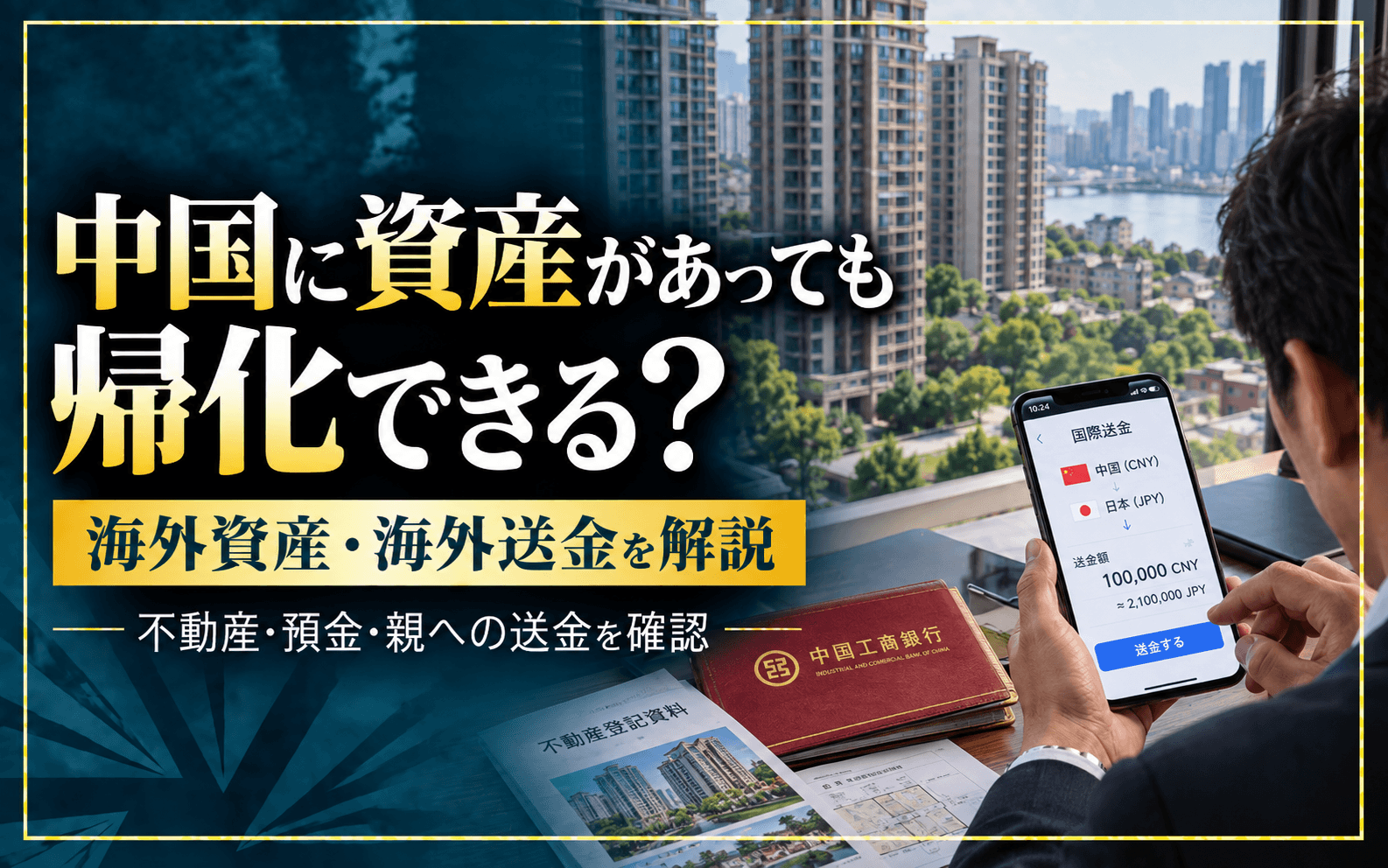
Can a Chinese national apply for Japanese naturalization while owning property or bank savings in China, supporting parents abroad, or receiving income from China? Overseas assets are not automatically a problem. The more important issue is whether overseas assets, income, remittances, Japanese tax records, and household finances are consistent with one another.
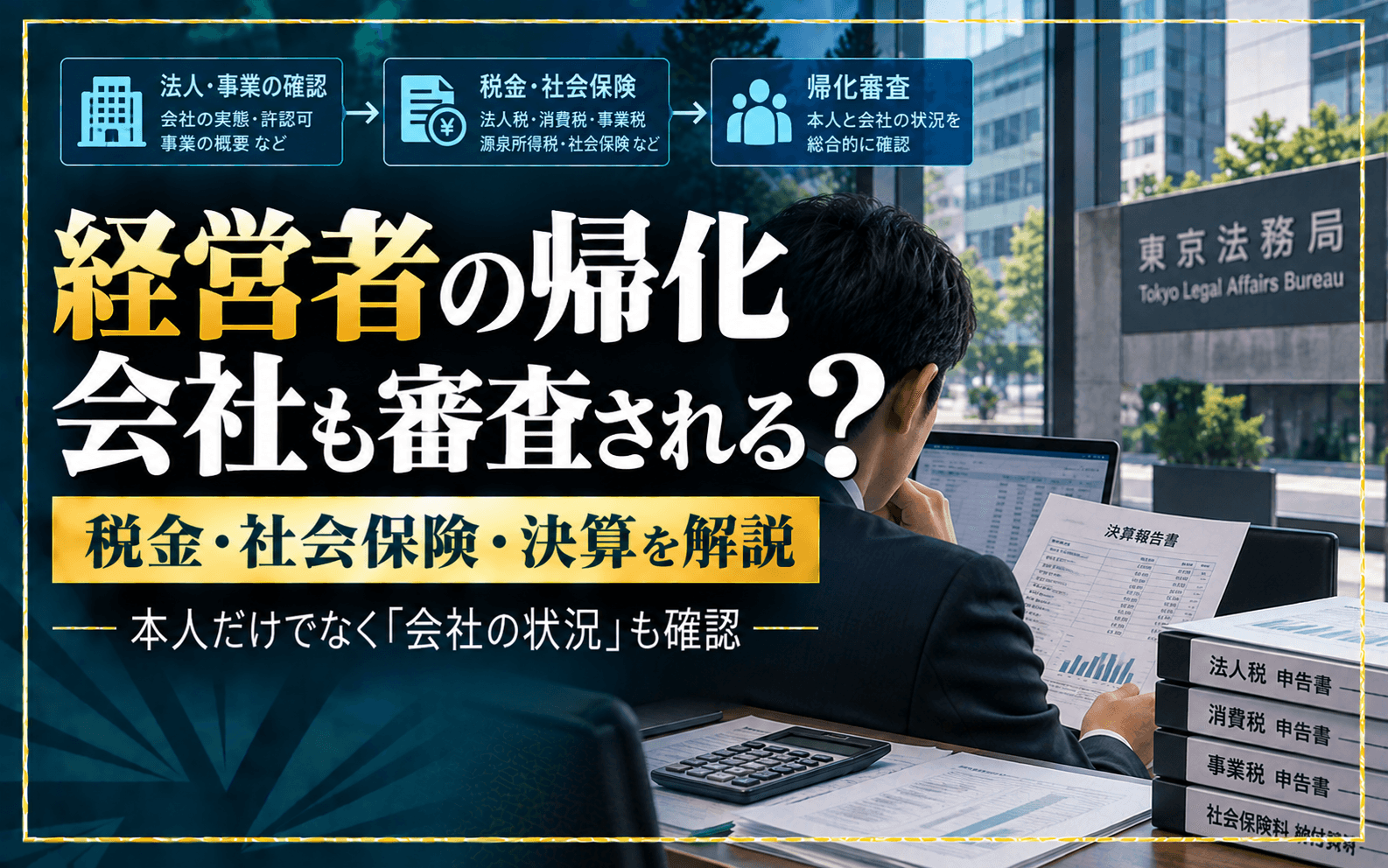
Read MoreCan a company owner or sole proprietor apply for Japanese naturalization? Business-owner cases involve more than the applicant’s personal income and taxes. Corporate taxes, consumption tax, business tax, withholding tax, company social insurance, financial statements, licensing, and the actual business operation can also require review.
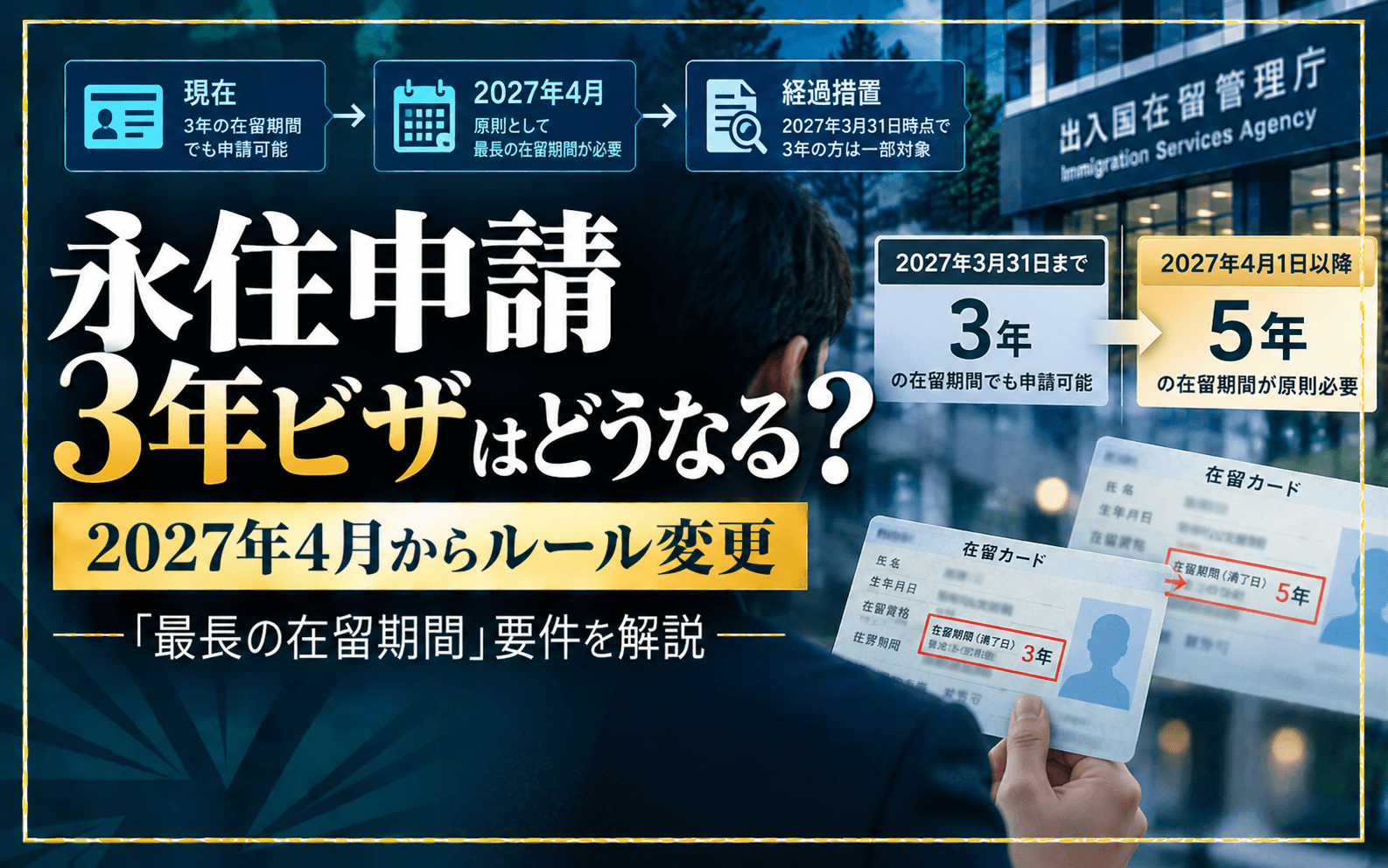
Read MoreA three-year period of stay can currently satisfy the “maximum period of stay” requirement for Japanese Permanent Residence, but the general transitional treatment ends on March 31, 2027. From April 2027, applicants will generally need the actual maximum period available for their current status. A separate transitional rule, however, applies to certain people who still hold a three-year period on March 31, 2027.
Read MoreLet's Start
Our scrivener carefully answers your visa and naturalization questions. Online consultations are available.