Column

Column
“I have lived in Japan for more than ten years. Can my application still be refused?”
“All of my taxes are paid now. Is that enough?”
“I have 80 HSP points. Does that make approval almost certain?”
Permanent Residence is not determined by one condition alone.
The authorities review the applicant’s overall residence and compliance history.
There Is No Official Single “Top Reason for Refusal”
The Immigration Services Agency does not publish a simple ranking of Permanent Residence refusal reasons.
In practice, multiple issues can overlap.
A job change, for example, may also involve direct resident-tax payments, National Pension enrollment, or missed immigration notifications.
Ordinary work-status applicants generally need:
10 consecutive years in Japan
including:
five consecutive years under an eligible work or residential status.
Ten years since first arrival is therefore not always enough.
Highly Skilled Applicants Must Also Prove Historical Points
The 70-point route requires the relevant score now and three years earlier.
The 80-point route requires it now and one year earlier.
A current score of 85 does not establish that the applicant had 80 points one year ago.
Permanent Residence does not focus only on whether unpaid tax remains today.
Timely performance of public obligations is also important.
Paying everything later does not necessarily erase the significance of earlier late payments.
Ordinary work-status applicants generally need to review the most recent two years of public pension and health insurance.
Job changes, self-employment, and business ownership can create periods requiring particular attention.
Business Owners May Also Need to Review Company Social Insurance
For business owners, personal payroll deductions alone do not establish that the company itself properly paid its social-insurance obligations.
Permanent Residence considers whether stable future living can be expected.
Japan does not publish a nationwide fixed minimum such as:
“¥3 million guarantees eligibility.”
Income history, household income, dependents, and employment stability can all matter.
Good conduct is generally required.
A minor blue-ticket traffic penalty and a court-imposed criminal fine are not the same thing.
Drunk driving, unlicensed driving, serious accidents, repeated violations, and criminal punishment require more careful review.
A valid residence card does not by itself establish that the applicant’s actual current work complies with the authorized status.
This can be particularly important after a substantial job or duty change.
Certain work-status holders must report matters such as resignation and changes of affiliated organizations.
Public obligations relevant to Permanent Residence include immigration-law notification duties as well as taxes and social insurance.
The guideline generally requires the maximum period available for the current status.
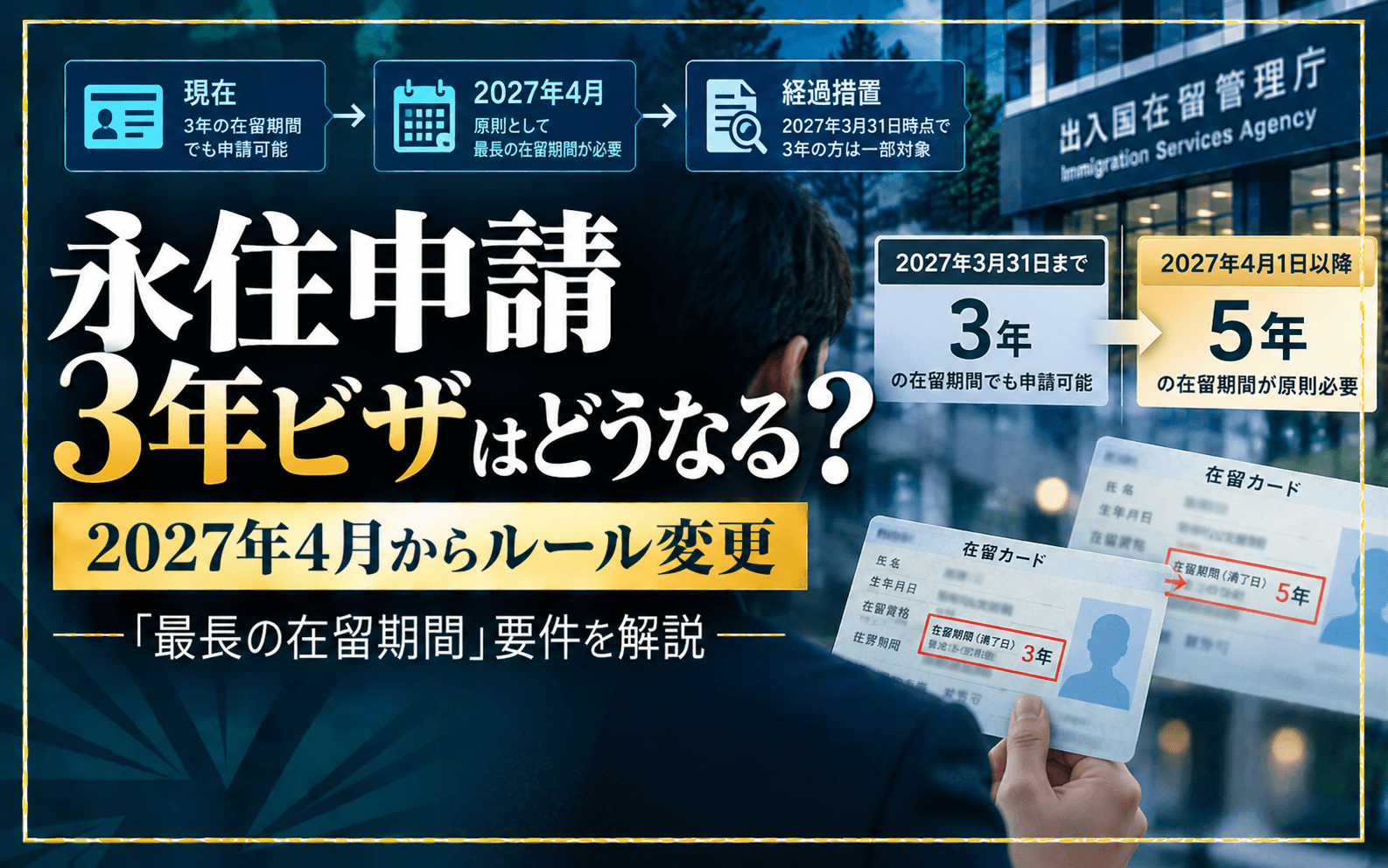
Under the present transition, a three-year period is still treated as satisfying this requirement through March 31, 2027.
The treatment changes from April 2027.
Certain spouses can benefit from the three-year marriage / one-year Japan residence exception.
However, the exception is based on a genuine continuing marriage.
Long separation or a substantially broken relationship can require closer review.
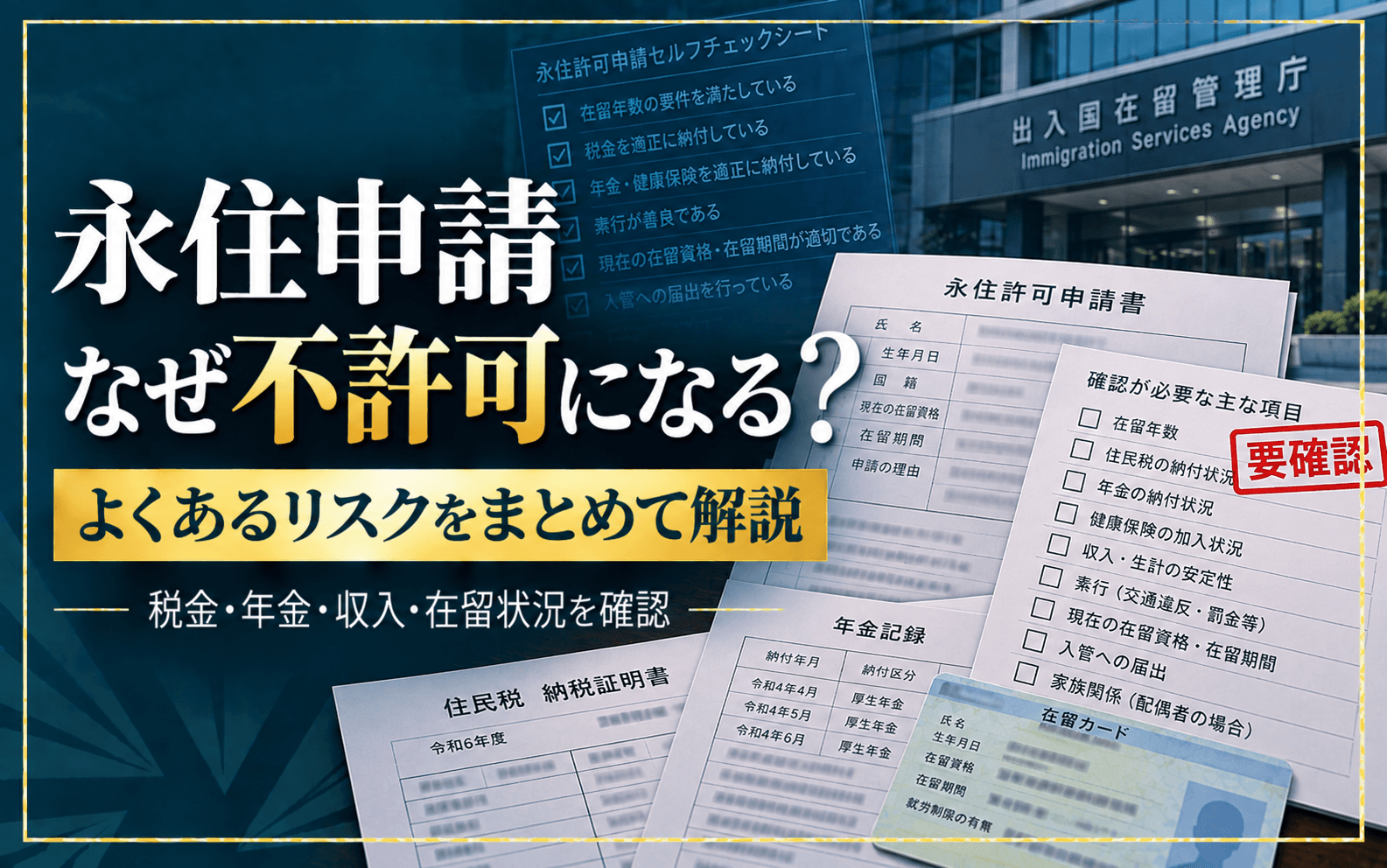
Employment dates, tax income, pension records, employment certificates, immigration forms, and HSP point evidence should be consistent.
A simple typo is different from a contradiction indicating an unresolved residence-status issue.
Filing First and Fixing It Later Is Not Always a Good Strategy
The Immigration Services Agency’s official self-check materials state that even one “No” can mean a higher likelihood of refusal.
At the same time, answering “Yes” to every item does not guarantee permission.
Examples include:
Recent job change
Recently starting a business
Major income reduction
Recent marital separation
Significant deterioration in a business owner’s company situation
These events do not automatically cause refusal.
However, they can change whether the applicant currently satisfies the relevant requirements.
Do Not Simply Refile the Same Application After Refusal
If an application is refused, the important first question is:
what caused the refusal?
Refiling substantially the same case without addressing the underlying issue may lead to the same result.
A refusal also does not necessarily mean that Permanent Residence will never be possible.
The cause and appropriate timing for a future application need to be reviewed.
Cases That Particularly Deserve Pre-Filing Review
Professional review may be particularly useful where the applicant has:
Just reached the 10-year residence period
A long student history
Recently changed jobs
Periods of direct resident-tax payment
Late tax payments
National Pension periods
National Health Insurance periods
Business ownership or self-employment
Traffic or criminal history
HSP points close to 70 or 80
Separation from a spouse in a spouse-based case
Uncertainty about whether current duties fit the status
A three-year period of stay with filing planned after the 2027 transition
In these cases, the central question is often not:
“Can I complete the forms?”
but:
“Is this the right time to file?”
Frequently Asked Questions
No. Residence duration is only one part of the assessment.
No. Other requirements can still create issues.
Timely payment may also matter.
The actual payment period and timing should be reviewed.
The 80-point threshold mainly concerns the residence-duration exception. It does not eliminate the other PR requirements.
There is no single nationwide waiting period. The underlying reason should be identified first.
The Key Question Is Not Merely Whether You Can File
For applicants with concerns involving taxes, pension, employment, traffic history, HSP points, marriage, or current status,
pre-filing eligibility and risk review can be more important than preparing the forms themselves.
Enlight Administrative Scrivener’s Office reviews tax, pension, income, residence history, employment, HSP points, family circumstances, and current immigration status before deciding whether the application should proceed now.
The initial Permanent Residence eligibility check is free of charge.
Permanent Residence support is generally limited to applicants within the jurisdiction of the Tokyo Regional Immigration Services Bureau.
Immigration Services Agency: Guidelines for Permission for Permanent Residence, revised February 24, 2026
Immigration Services Agency: Permanent Residence Application
Immigration Services Agency: Q&A on the Permanent Residence System
Immigration Services Agency: Immigration and Residence Examination Q&A
Immigration Services Agency: Permanent Residence Self-Check Sheet
Related
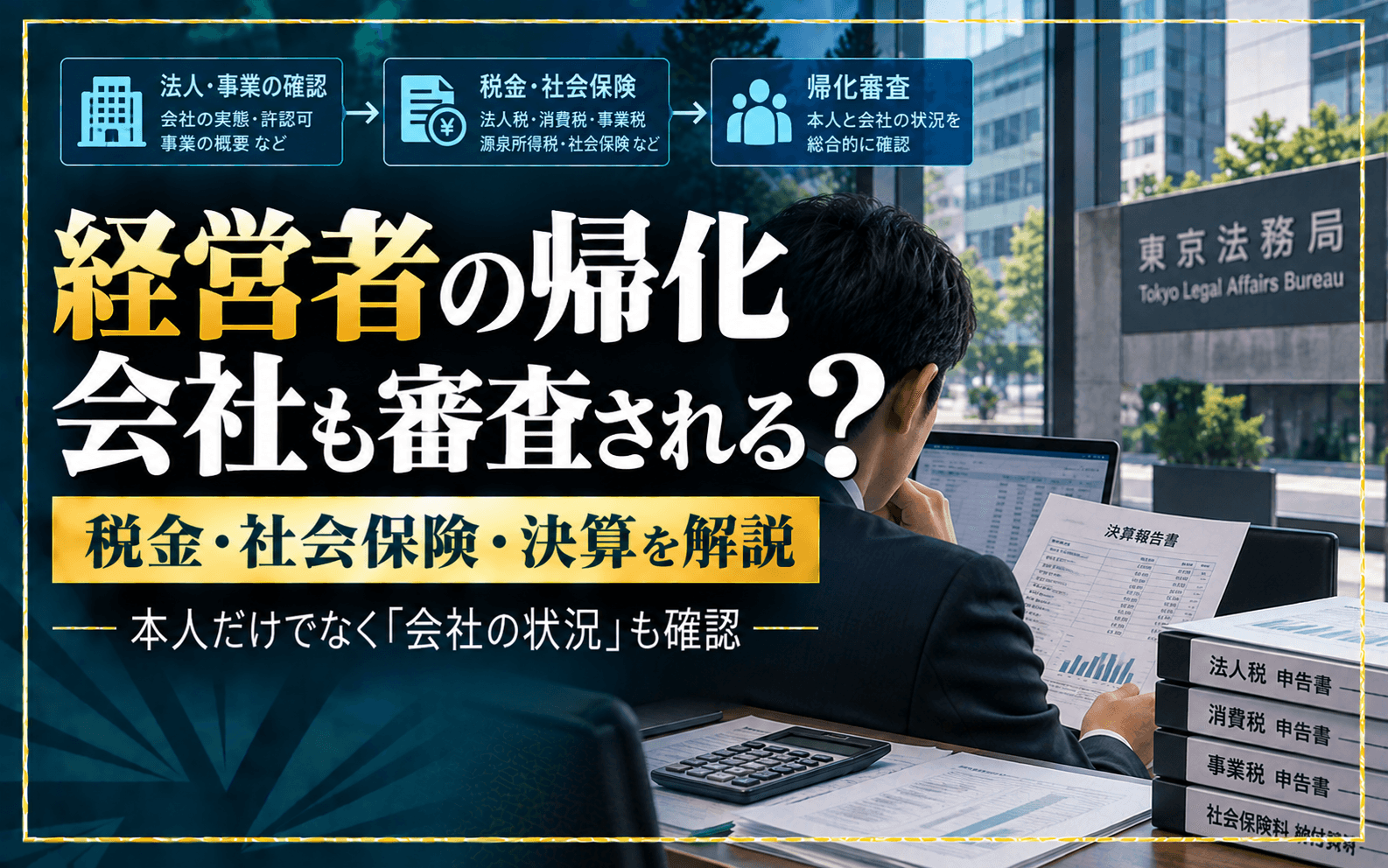
Can a company owner or sole proprietor apply for Japanese naturalization? Business-owner cases involve more than the applicant’s personal income and taxes. Corporate taxes, consumption tax, business tax, withholding tax, company social insurance, financial statements, licensing, and the actual business operation can also require review.
Read MoreA three-year period of stay can currently satisfy the “maximum period of stay” requirement for Japanese Permanent Residence, but the general transitional treatment ends on March 31, 2027. From April 2027, applicants will generally need the actual maximum period available for their current status. A separate transitional rule, however, applies to certain people who still hold a three-year period on March 31, 2027.
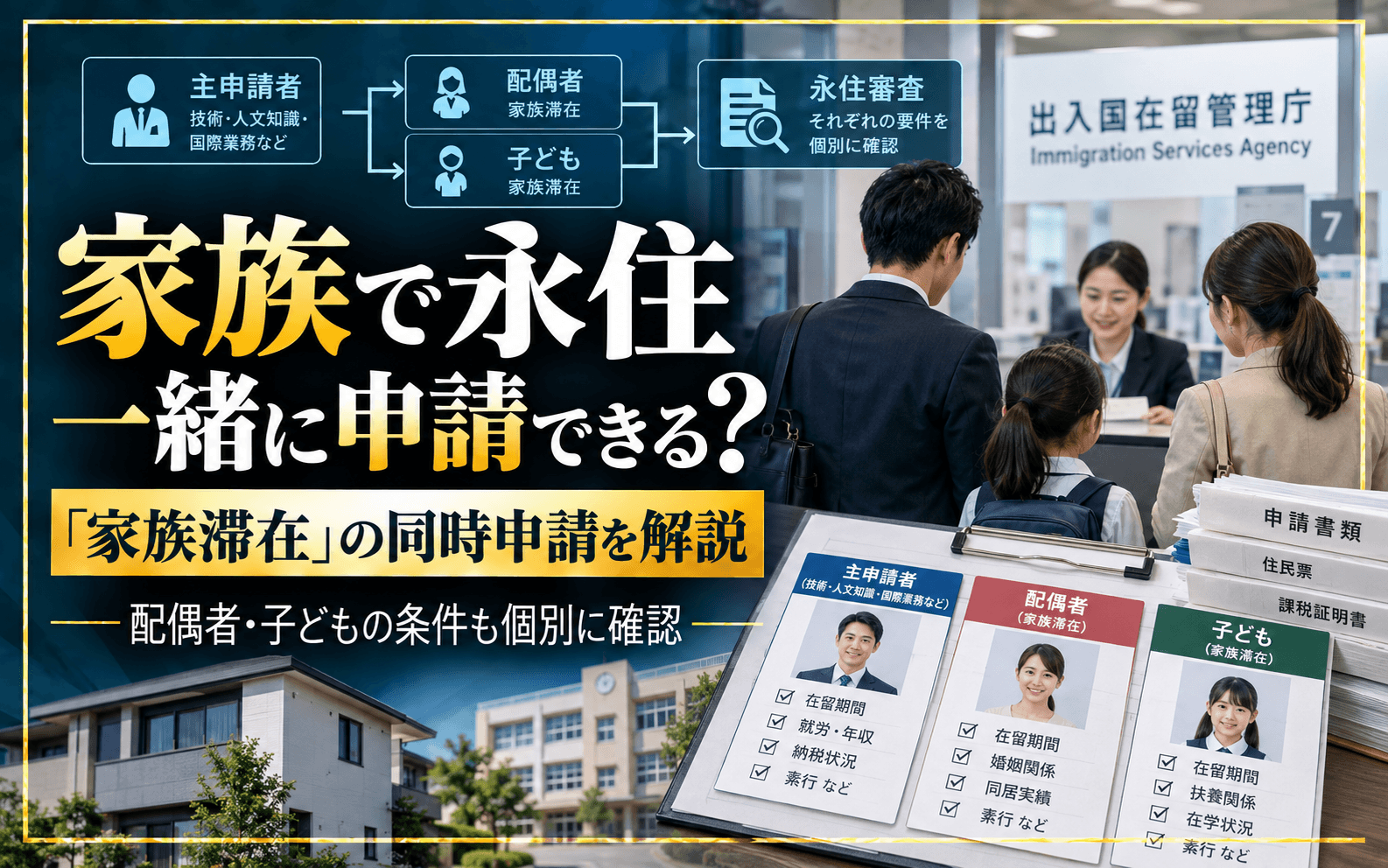
Read MoreWhen a work-status holder applies for Japanese Permanent Residence, can a spouse and children under Dependent status apply at the same time? Family applications require more than checking the principal applicant. Marriage duration, each child’s residence history, household income, taxes, pension, outside-status work, and overseas absences can all affect the appropriate filing strategy.
Read MoreLet's Start
Our scrivener carefully answers your visa and naturalization questions. Online consultations are available.