Column
How Long Does Japanese Permanent Residence Take? Actual Processing Time Is Now Around 10 Months 【2026 Update】
“How many months does Permanent Residence take?”
“The website says four to six months, but I have already waited eight.”
“Does a long review mean my application will be refused?”
The actual waiting period for Permanent Residence is currently much longer than many applicants expect.
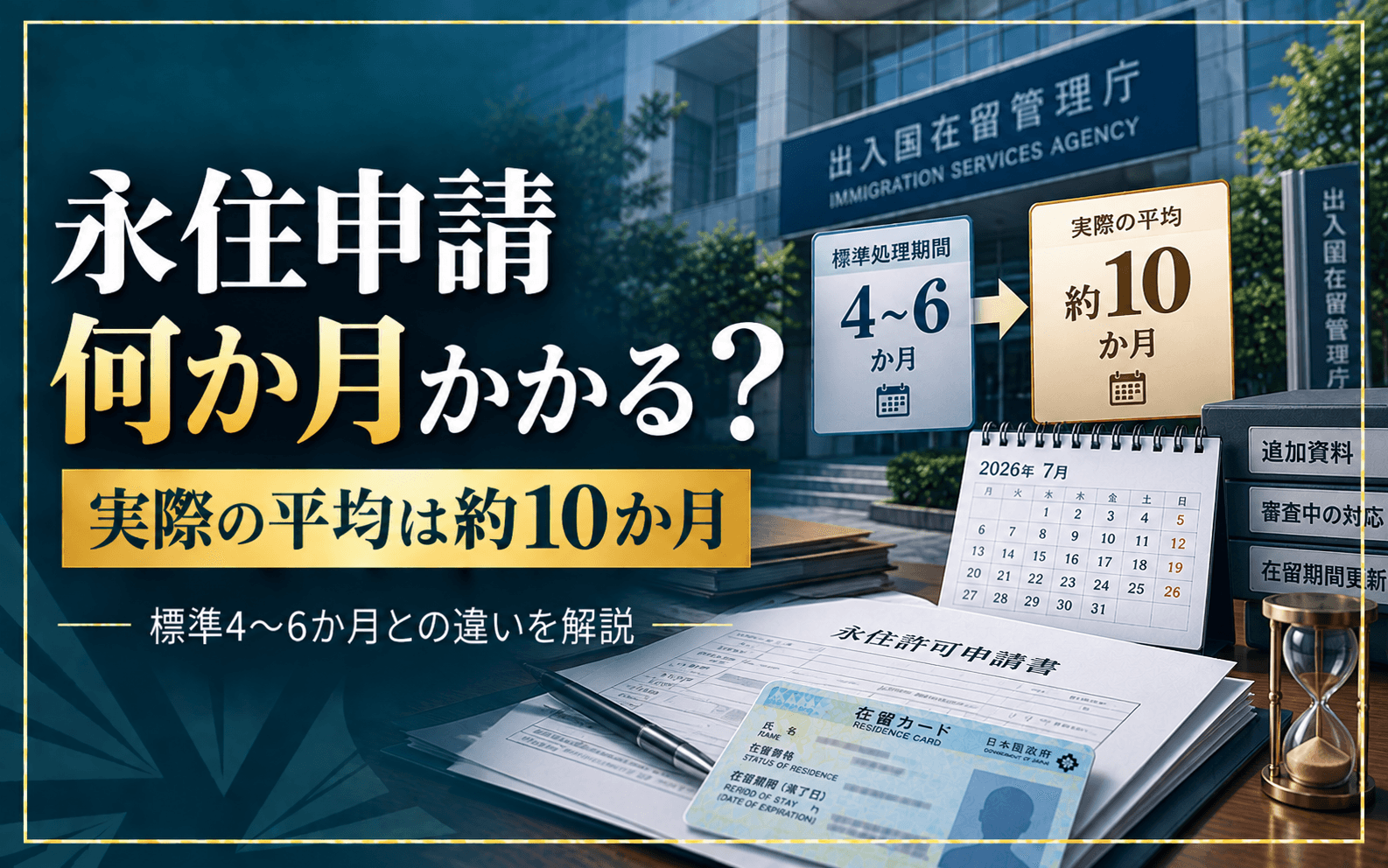
The Official Standard Processing Period Is 4–6 Months
The Immigration Services Agency currently lists the standard processing period for Permanent Residence as:
four to six months.
This does not guarantee that every application will be completed within six months.
The Latest Actual Average Is About 10 Months
As of September 2026, the latest published figures cover applications approved in July 2026.
The national average from application to notification of the decision was approximately:
310.2 days
or roughly:
10 months.
Applicants should therefore avoid planning on the assumption that a decision will necessarily arrive within six months.
310 Days Is a National Average
The figure covers immigration offices nationwide.
It does not mean that every case filed with the Tokyo Regional Immigration Services Bureau will take exactly 310 days.
Individual processing time can vary depending on the case and office.
What Does the Published Processing Time Include?
The published figure runs from acceptance of the application until notification of permission.
Time Spent Waiting for Additional Documents Is Included
If Immigration asks for further evidence, the time taken by the applicant to prepare and submit it is included in the processing period.
Refusals and Withdrawals Are Not Included
The published average covers permitted cases and excludes refused and withdrawn applications.
It therefore cannot be used as an exact prediction for an individual case.
A Long Wait Does Not Mean Refusal
Because current permitted cases themselves average around ten months, exceeding six months does not by itself indicate that something is wrong.
Processing time alone cannot tell you whether the final decision will be positive or negative.
Respond Promptly to Requests for Additional Evidence
Immigration may request updated documents such as:
Payslips
Employment certificates
Resident-tax records
Pension records
Health-insurance records
Documents after a job change
Family-status evidence
Written explanations
Submit the requested material accurately and within the specified deadline.
Receiving such a request does not by itself mean the application will be refused.
What If Your Current Status Expires While PR Is Pending?
Filing for Permanent Residence does not automatically extend your current period of stay.
If your current status will expire before the Permanent Residence decision, you must separately apply for an extension of your existing status.
Permanent Residence and renewal of your current status are separate procedures.
Report Job Changes During the Review
If you resign or change jobs while the Permanent Residence application is pending, promptly notify the immigration office handling the application.
The Letter of Understanding submitted with the application also requires applicants to report relevant changes during the review.
Address Changes Also Matter
Because Permanent Residence review can continue for close to a year, applicants may move during the process.
Complete the required address procedures and make sure important Immigration correspondence does not continue going to an old address.
Family Changes May Need to Be Reported
Marriage, divorce, death of a spouse, or birth of a child can affect the information underlying the application.
This is particularly important for applicants relying on a spouse-based exception.
Continue Paying Taxes and Social Insurance on Time
Compliance does not stop on the filing date.
During a ten-month review period, new deadlines may arise for:
Resident tax
National Pension
National Health Insurance
Continue meeting all public obligations on time until the decision is issued.
What If Your Income Drops?
A job change, leave of absence, or other event may reduce current income.
A temporary decrease does not automatically mean refusal, but Permanent Residence considers whether a stable future livelihood remains likely.
Highly Skilled Applicants Should Monitor Their Points
Applicants using the 70- or 80-point route should also pay attention to changes in:
Income
Employment
Bonus-point eligibility
Total HSP score
particularly after changing jobs.
Can You Make the Review Faster?
There is no general system under which paying more or hiring an administrative scrivener automatically gives an application priority.
Professional assistance does not itself move an application ahead in the queue.
However, submitting a complete and internally consistent application can reduce avoidable follow-up caused by missing or unclear evidence.
What If More Than One Year Has Passed?
310 days is only an average, so some cases may exceed one year.
Where a long period has passed and there have also been address changes, additional-document submissions, job changes, or other important developments, applicants may consider contacting the immigration office handling the case.
An inquiry itself does not guarantee faster processing.
Frequently Asked Questions
Q. How Many Months Does Permanent Residence Take?
The official standard processing period is four to six months, while the July 2026 national average for permitted cases was approximately 310.2 days, or about ten months.
Q. I Have Already Waited Eight Months. Is That Abnormal?
Given the current actual averages, exceeding six months alone does not establish that the case is abnormal.
Q. Does a Ten-Month Review Mean Refusal?
No. Processing time alone cannot predict the result.
Q. Immigration Asked for More Documents. Is That a Bad Sign?
Not necessarily. Respond accurately and by the stated deadline.
Q. My Current Status Will Expire While PR Is Pending.
File a separate extension application for the current status.
Q. Can I Change Jobs During the Permanent Residence Review?
Yes, but applicable notifications must be made and the immigration office handling the PR application should be informed.
Q. Will Hiring an Administrative Scrivener Make the Review Faster?
There is no system that automatically gives priority merely because an administrative scrivener represents the applicant.
In 2026, Plan for a Review That May Approach One Year
The official standard remains:
4–6 months.
However, the latest actual national average is approximately:
310 days, or about 10 months.
Applicants should therefore continue properly managing their current immigration status, employment, address, taxes, pension, and health insurance throughout the review.
Enlight Administrative Scrivener’s Office can assist with eligibility review, application preparation, and changes or additional-document requests that arise while the application is pending.
The initial Permanent Residence eligibility check is free of charge.
Permanent Residence support is generally limited to applicants within the jurisdiction of the Tokyo Regional Immigration Services Bureau.
References
Immigration Services Agency: Permanent Residence Application
Immigration Services Agency: Residence Examination Processing Times
Immigration Services Agency: Guidelines for Permission for Permanent Residence
Immigration Services Agency: Permanent Residence Letter of Understanding
Immigration Services Agency: Extension of Period of Stay Application