Column
Column
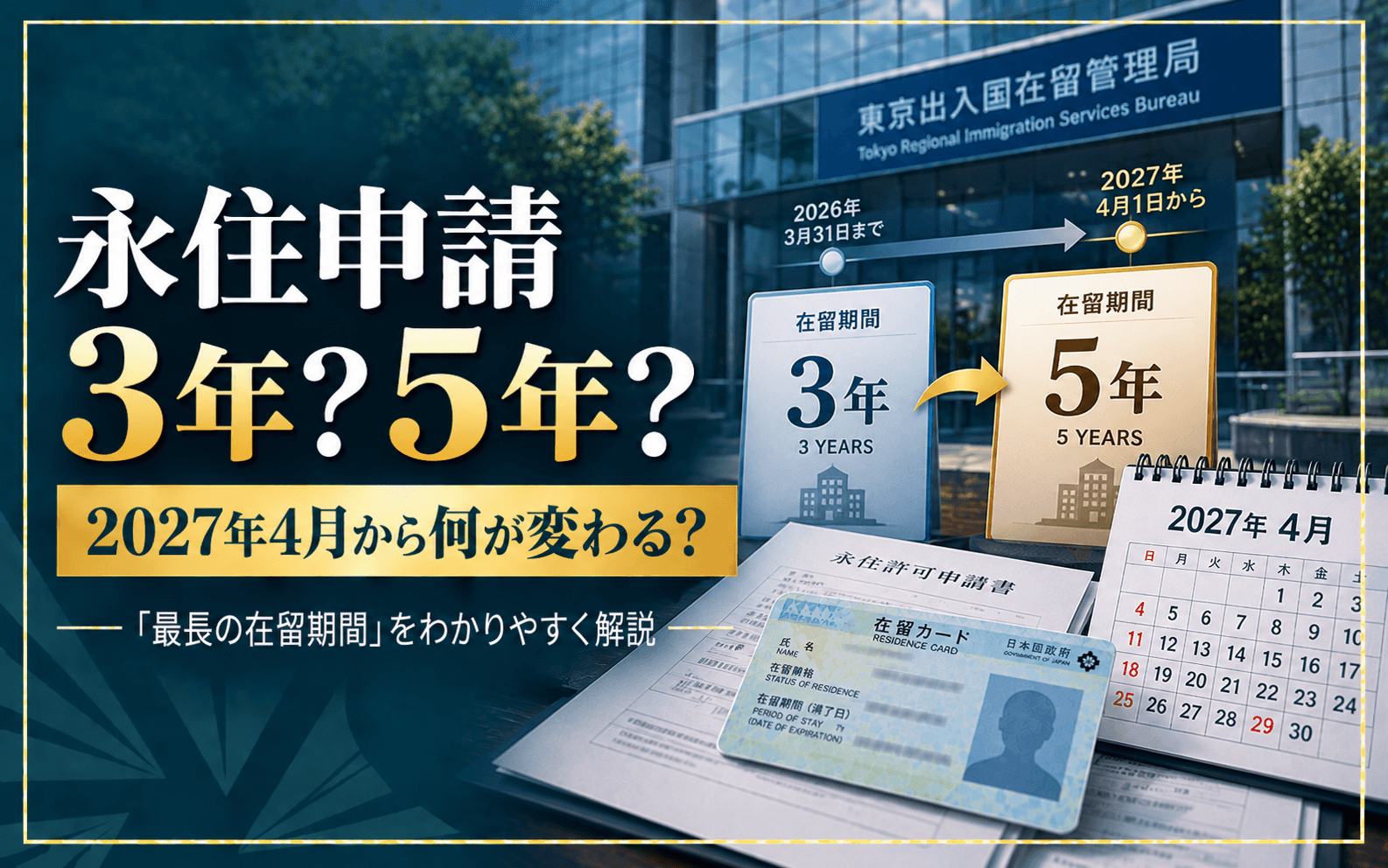
“I currently have a three-year period of stay. Can I apply for Permanent Residence?”
“Will everyone need a five-year visa from 2027?”
“Should I apply before April 2027?”
As of 2026, a three-year period of stay can still satisfy the Permanent Residence requirement.
However, an important change takes effect in April 2027.
A Three-Year Period Still Qualifies in 2026
The Permanent Residence guidelines generally require applicants to hold:
the maximum period of stay available under their current status of residence.
For example, Engineer/Specialist in Humanities/International Services may be granted:
Five years
Three years
One year
Three months
Its actual maximum period is therefore five years.
However, through March 31, 2027, the guidelines continue to treat a three-year period as satisfying the maximum-period requirement.
Accordingly, having a three-year period does not by itself prevent a Permanent Residence application in 2026.
What Changes on April 1, 2027?
From April 1, 2027, the general transitional treatment of three-year periods ends.
Applicants will generally need to hold:
the actual maximum period prescribed for their current status of residence.
For Engineer/Specialist in Humanities/International Services, that normally means five years.
The same is true for statuses such as Spouse or Child of Japanese National, where five years is the longest of the available periods.
“Everyone Needs Five Years From 2027” Is Not Completely Accurate
The guideline does not literally require five years for every status.
It requires:
the maximum period for the applicant’s particular status of residence.
For example, Specified Skilled Worker (ii) has a maximum period of three years.
Accordingly, the relevant maximum depends on the status itself.
For many common work and family statuses, however, five years is the longest available period, making five-year status increasingly important after April 2027.
There Is an Additional Transitional Rule for People Who Already Hold Three Years on March 31, 2027
The change does not mean that every person holding three years becomes ineligible overnight on April 1.
If an applicant holds a three-year period of stay as of March 31, 2027, the guideline provides additional transitional treatment.
Where the Permanent Residence decision is made within that existing period of stay, the three-year period may be treated as the maximum period for the first such decision/application under the transitional rule.
Applicants therefore need to consider their actual expiration date rather than looking only at April 1, 2027.
Filing Before March 31 Does Not Automatically Solve Everything
It is also too simple to say:
“As long as you file before March 31, you are safe.”
The official transition refers to the applicant holding a three-year period as of March 31, 2027 and receiving the Permanent Residence disposition within that period.
Applicants should therefore review:
Current expiration date
PR filing date
Status held on March 31, 2027
Whether renewal may become necessary while PR is pending
What About a One-Year Period of Stay?
For statuses whose maximum is five years, a one-year period is not the maximum.
The current transitional treatment specifically addresses three-year periods.
It does not generally treat a one-year period as the maximum.
Accordingly, applicants holding only one year under an ordinary five/three/one-year status generally do not satisfy this PR requirement.
What About Spouses of Japanese Nationals?
As of 2026, applicants holding a three-year period under Spouse or Child of Japanese National or Spouse or Child of Permanent Resident can also benefit from the current three-year transitional treatment.
The other spouse-route requirements still need to be satisfied.
What About Highly Skilled Professionals?
Highly Skilled Professional (i) generally receives a five-year period of stay.
Applicants already holding that status therefore usually do not face the same three-year issue.
However, some applicants use the 70- or 80-point Permanent Residence route while remaining under an ordinary work status.
In that situation, their actual current period of stay still needs to be checked.
How Can You Get a Five-Year Period at the Next Renewal?
There is no nationwide formula guaranteeing a five-year period based solely on salary, years of employment, or a particular number of renewals.
The Immigration Services Agency explains that relevant considerations can include:
Compliance with immigration notification duties
Payment of taxes and other public obligations
Previous periods of stay
Expected future period of residence
Condition of the employer for work statuses
Tax compliance of the primary household supporter for residential statuses
School attendance of compulsory-school-age children where applicable
The final period is determined after an overall review.
Missed Job-Change Notifications Can Matter
Compliance with immigration notification duties is one factor considered when determining longer periods of stay.
Applicants who changed jobs or left an employer without completing the required notifications should review their history before the next renewal.
Taxes and Social Insurance Also Matter
Proper compliance with public obligations is relevant not only to Permanent Residence itself but also to the applicant’s broader residence record.
Applicants planning future PR should therefore maintain proper tax and social-insurance compliance on an ongoing basis.
Can You Change From Three Years to Five Years Immediately?
There is generally no standalone procedure simply asking Immigration to:
“change my current three years to five years.”
The next period is usually determined when the applicant files an extension of period of stay.
Applicants planning Permanent Residence after April 2027 should therefore consider their next renewal schedule.
What If Your Three-Year Period Expires While PR Is Pending?
Permanent Residence filing does not automatically extend the current status.
If the existing period expires before the PR decision, a separate extension application is required.
This may be especially important around the 2027 transition.
What If Immigration Grants Three Years Again After April 2027?
Where the status has a five-year maximum and a new three-year period is granted after April 2027, the applicant would generally not satisfy the guideline’s maximum-period requirement.
This should be distinguished from the special transitional treatment for applicants already holding three years on March 31, 2027.
Do Not Rush an Application Only Because the Three-Year Rule Is Ending
Permanent Residence also requires review of:
Residence history
Stable livelihood
Resident tax
National tax
Pension
Health insurance
Conduct
Compliance with the current immigration status
A three-year transitional rule should not be used as a reason to file before the rest of the application is ready.
What to Check Before 2027
Applicants currently holding three years should review:
Current status of residence
Maximum period for that status
Current expiration date
Status held on March 31, 2027
Next renewal date
Whether the PR residence-history requirement is met
Tax, pension, and health-insurance compliance
Immigration notifications
Possible Highly Skilled Professional route
Frequently Asked Questions
As of 2026, yes, the transitional rule treats three years as satisfying the maximum-period requirement, subject to the other PR requirements.
No. The formal requirement is the maximum period for the particular status, although five years is the maximum for many common statuses.
Additional transitional treatment may apply if the PR disposition occurs within that existing period, for the first qualifying case under the rule.
Generally not where the status has a longer maximum. The current transitional treatment specifically concerns three-year periods.
There is no guaranteed formula. Immigration assesses the overall residence record and other relevant circumstances.
Normally, the period is reconsidered at the next extension application rather than through a standalone request solely to change the duration.
Applicants With Three Years Should Review Their Position Before the 2027 Transition
In 2026:
three years can still satisfy the Permanent Residence period-of-stay requirement.
From April 2027, the general rule will require:
the actual maximum period available for the current status.
At the same time, applicants already holding a three-year period on March 31, 2027 may qualify for transitional treatment.
Enlight Administrative Scrivener’s Office can review your current period of stay, expiration date, 2027 transition, residence history, tax and pension records, and potential Highly Skilled Professional route before filing.
The initial Permanent Residence eligibility check is free of charge.
Permanent Residence support is generally limited to applicants within the jurisdiction of the Tokyo Regional Immigration Services Bureau.
Immigration Services Agency: Guidelines for Permission for Permanent Residence, revised February 24, 2026
Immigration Services Agency: Permanent Residence Application
Immigration Services Agency: Immigration and Residence Examination Q&A
Immigration Services Agency: Status of Residence List
Immigration Services Agency: Engineer/Specialist in Humanities/International Services
Immigration Services Agency: Spouse or Child of Japanese National
Immigration Services Agency: Spouse or Child of Permanent Resident
Related
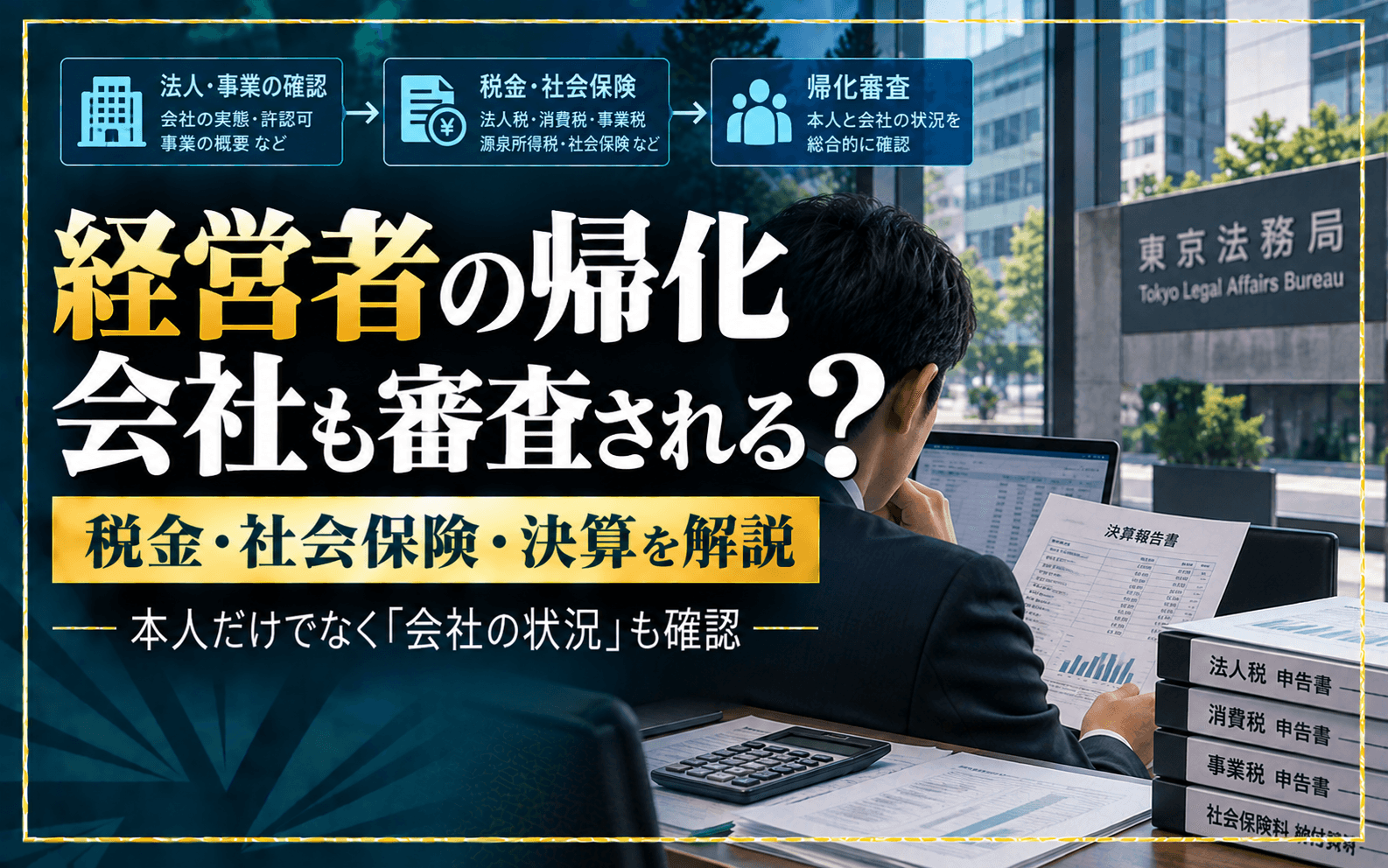
Can a company owner or sole proprietor apply for Japanese naturalization? Business-owner cases involve more than the applicant’s personal income and taxes. Corporate taxes, consumption tax, business tax, withholding tax, company social insurance, financial statements, licensing, and the actual business operation can also require review.
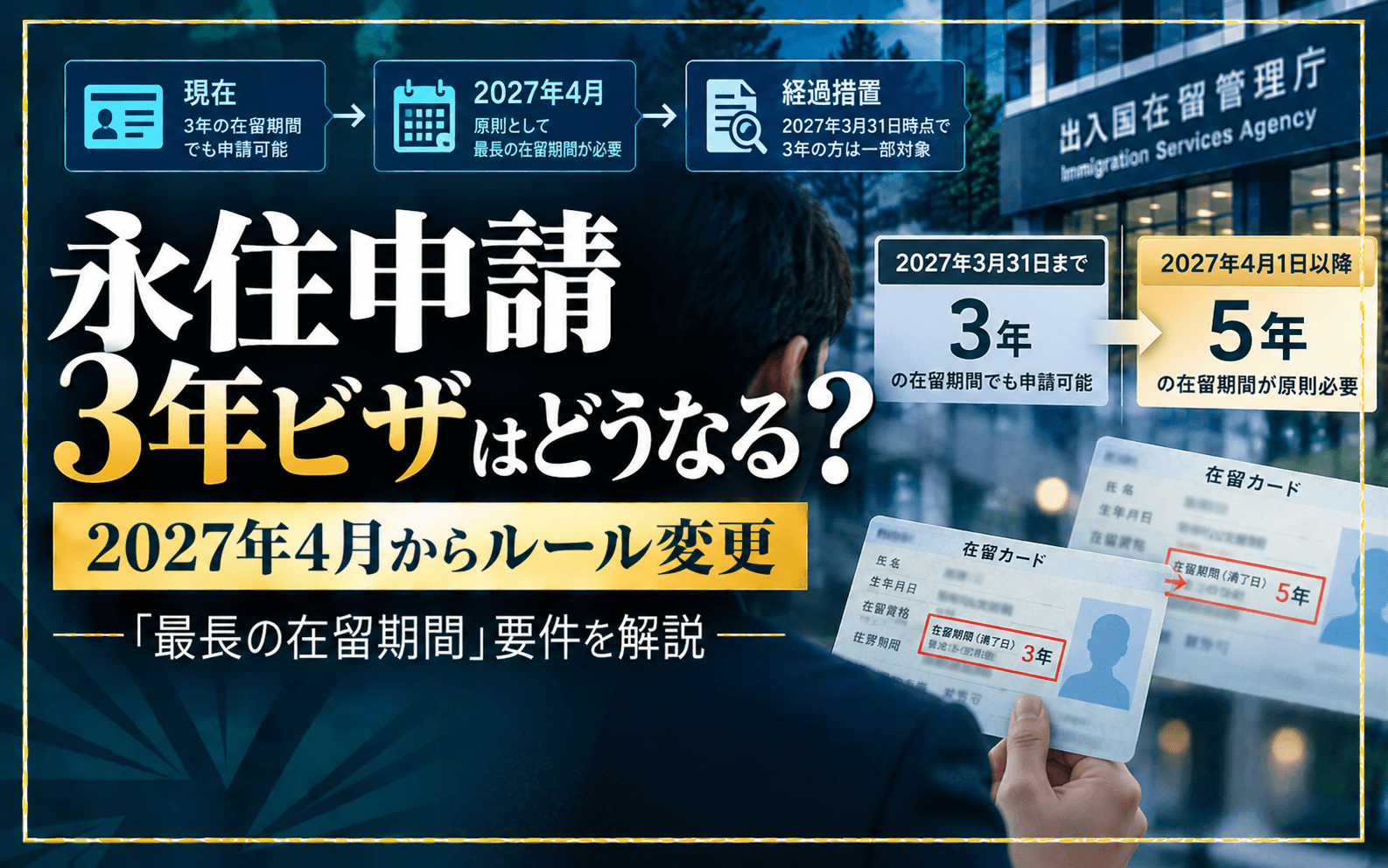
Read MoreA three-year period of stay can currently satisfy the “maximum period of stay” requirement for Japanese Permanent Residence, but the general transitional treatment ends on March 31, 2027. From April 2027, applicants will generally need the actual maximum period available for their current status. A separate transitional rule, however, applies to certain people who still hold a three-year period on March 31, 2027.
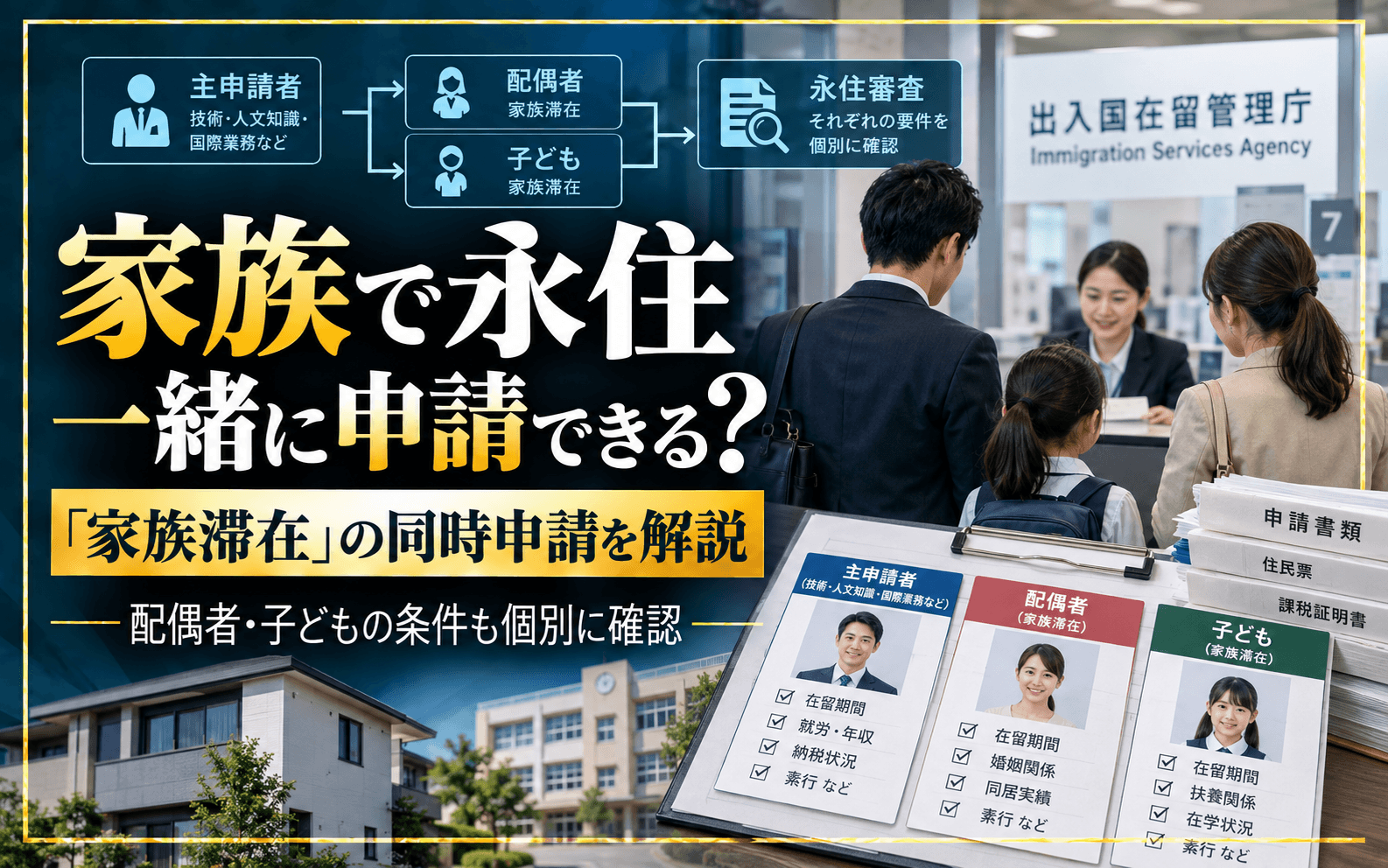
Read MoreWhen a work-status holder applies for Japanese Permanent Residence, can a spouse and children under Dependent status apply at the same time? Family applications require more than checking the principal applicant. Marriage duration, each child’s residence history, household income, taxes, pension, outside-status work, and overseas absences can all affect the appropriate filing strategy.
Read MoreLet's Start
Our scrivener carefully answers your visa and naturalization questions. Online consultations are available.