Column
Can You Lose Permanent Residence in Japan? New Rules from April 2027 and Unpaid Taxes or Social Insurance [2026 Update]
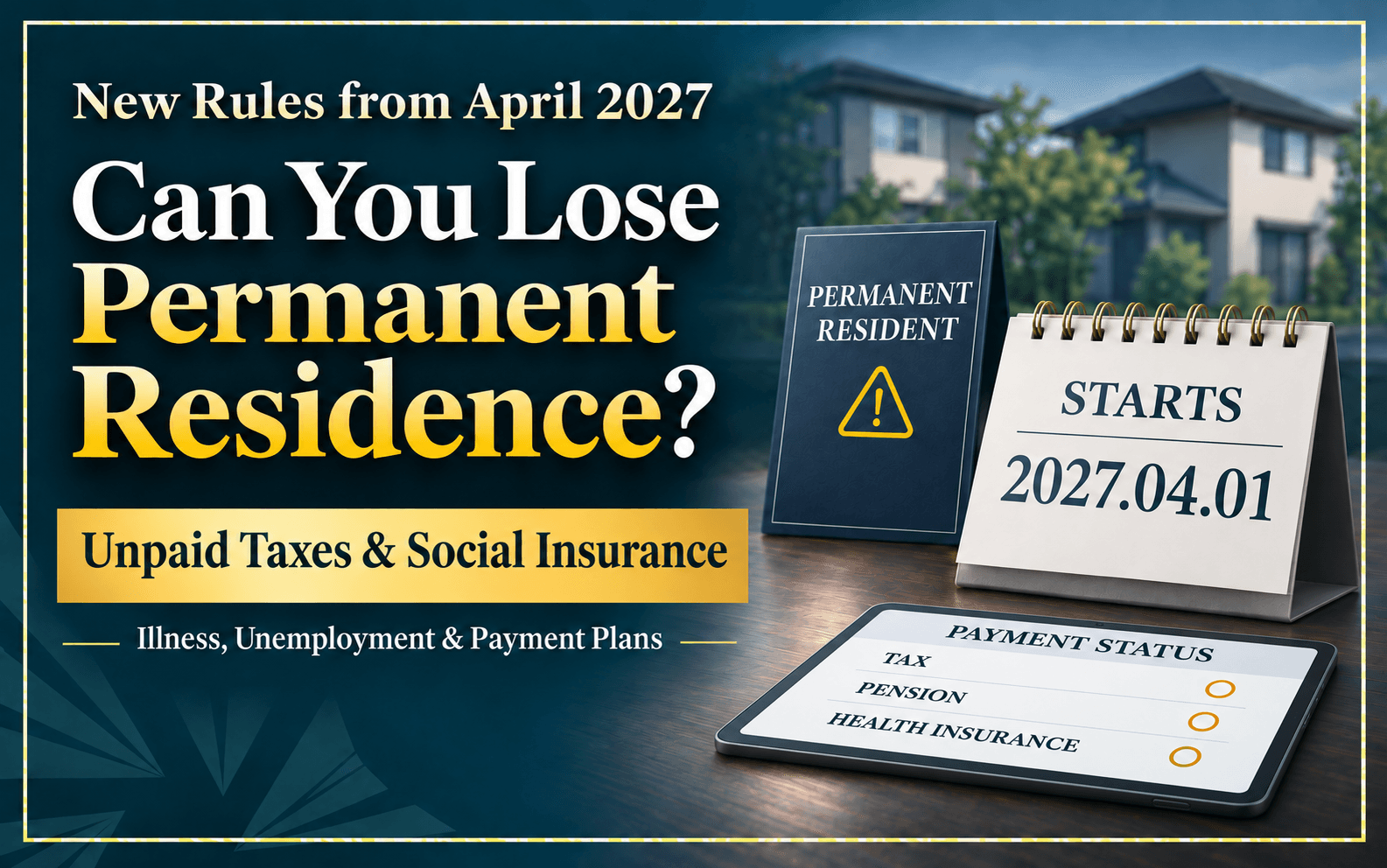
Japan will begin applying new permanent residence revocation grounds on April 1, 2027. Learn how intentional nonpayment, residence-card duties, specified criminal convictions, illness, unemployment, payment plans and a change to Long-Term Resident status are assessed.
“Will a late tax payment immediately cost me permanent residence?” “What if I cannot pay insurance premiums after losing my job?” These questions need a careful distinction between a payment problem and the legal grounds for revocation.
The Immigration Services Agency published guidelines on the additional revocation grounds in October 2026 and states that their operation will begin on April 1, 2027. As of November 7, 2026, that start date is still in the future.
Nonpayment alone does not produce an automatic decision. This article explains the new grounds for people who already hold Japan’s Permanent Resident status, the assessment of personal circumstances, possible changes to another status and practical preparation.
When do the rules start, and who is affected?
The additional grounds will begin operating on April 1, 2027. They concern existing Permanent Residents as well as people granted that status in the future. Special Permanent Resident status is a separate system and is outside this article’s scope.
The conditions for obtaining permanent residence and revocation after permission are different questions. Existing revocation rules, including those concerning false applications, already apply. The new start date does not mean permanent residence cannot be revoked before 2027.
Three main additional grounds
The new grounds concern: (1) failure to comply with obligations under the Immigration Control Act; (2) intentional nonpayment of public taxes and charges; and (3) a sentence of imprisonment for specified criminal offenses.
Intent is central to the nonpayment ground. It does not follow that every immigration-law obligation breach must also be intentional. The requirements for each ground and the subsequent decision must be considered separately.
What counts as intentional nonpayment?
Public taxes and charges include taxes such as income and resident tax, health insurance premiums and public pension contributions, including National Pension and Employees’ Pension Insurance. This category does not simply include every administrative fee, facility charge or traffic infraction payment.
The guidelines address people who know they have a payment obligation but deliberately do not pay. Deliberate failure to file a tax return may also be relevant. Assessment considers income, assets, amounts, duration, repetition, payment history, reasons and subsequent conduct.
There is no universal rule that one late payment, or a particular yen amount, automatically leads to revocation. If you discover arrears, check the position with the collecting authority and arrange payment or appropriate advice promptly.
Ignoring arrears and repeatedly breaking agreements
Potential concerns include prolonged arrears with an unknown whereabouts, no apparent willingness to pay despite demands or enforcement, and repeatedly failing to honor installment or deferral arrangements. Tax evasion and concealing assets may also be relevant.
The amount outstanding or receipt of a demand letter does not decide the outcome by itself. Immigration authorities investigate the facts and hear the person’s views, considering explanations alongside objective records.
Illness, unemployment, disasters and payment plans
Inability to pay because of unavoidable circumstances such as illness, disaster or unemployment is distinguished from intentional nonpayment. Business deterioration, domestic violence and other circumstances causing hardship may also require consideration.
Explain the situation to the collecting authority and comply with any approved installment or deferral terms. However, making one enquiry is not a guarantee against revocation. Confirm the formal arrangement and continue meeting its conditions.
Useful records may include medical evidence, separation-from-employment documents, proof of reduced income, consultation records, installment or deferral notices and receipts. These are examples for preparing a consultation, not a uniform mandatory submission list.
What if your employer failed to remit deductions?
If tax or insurance premiums were deducted from wages but the employer failed to remit them, that is distinguished from intentional nonpayment by the employee. Keep payslips or other evidence of the deductions.
A different assessment may apply to a Permanent Resident who knows of the company’s payment obligations and materially influences its management decisions. Ordinary employees and people exercising substantive management influence cannot be treated as identical.
Residence-card duties continue after permanent residence
Permanent Resident status has no fixed period of stay, but the residence card itself has an expiry date. Duties concerning renewal, reissuance, carrying and presenting the card continue to apply.
A breach of these immigration-law obligations can fall within a revocation ground even without intent. Nevertheless, a valid reason or an isolated failure to carry the card does not mean automatic immediate revocation. Manage the card’s expiry separately from the indefinite status.
Specified criminal convictions and suspended sentences
The criminal ground covers offenses specified by law, including theft and fraud; it does not cover every offense or violation indiscriminately. Arrest or a fine alone does not establish this imprisonment-based ground.
A prison sentence for a covered offense includes one whose execution is suspended. A first offense is not necessarily without immigration consequences: an official change to another residence status may be considered. Criminal tendencies, family circumstances and other individual factors affect the response. Consult a lawyer where criminal proceedings are involved.
Does a report mean immediate removal? Revocation versus status change
National or local government officers who learn relevant facts in their ordinary duties may report them to immigration authorities. This is not a universal reporting duty, nor a system in which every late tax payment automatically produces a report and revocation.
Reports are followed by fact-finding and procedures such as hearing the person’s views. Even where a ground is established, the system provides for an official change to another residence status unless allowing continued residence in Japan would be inappropriate.
In many cases, Long-Term Resident status is expected to be the alternative. Long-Term Resident and Permanent Resident are different statuses: the former has a defined period of stay and requires renewal. Meeting a revocation ground must not be equated with immediate deportation.
Can pre-April 2027 arrears matter? What to check now
The guidelines explain that intentional nonpayment occurring after a grant of permanent residence but before commencement may be relevant if discovered after commencement. Assessment is not based solely on one past point in time; later payments and other circumstances are also considered.
Do not assume pre-April 2027 arrears are irrelevant, or that any old unpaid amount guarantees revocation. Check tax, pension and health insurance records, and organize the reasons for arrears and the steps currently being taken.
If immigration authorities request documents or an explanation, note the deadline and respond with an accurate account supported by records. A later permanent residence application may be possible if the requirements are met again, but it requires a fresh assessment and is not guaranteed.
Frequently Asked Questions (FAQ)
Q1. Will one late resident-tax payment end my permanent residence?
A late payment does not automatically produce revocation. Intent, reasons and subsequent action are relevant. Check the payment position and do not leave arrears unresolved.
Q2. I cannot afford National Health Insurance after losing my job. Is revocation immediate?
Unavoidable hardship such as unemployment is distinguished from deliberate nonpayment. Explain the situation to the municipality, ask about available reductions, deferrals or installments, and comply with any approved terms.
Q3. Does asking for installments guarantee safety?
An enquiry alone does not decide the issue. Formal approval, compliance with the terms and the wider history matter. Keep consultation and payment records.
Q4. Am I responsible if my employer did not remit social insurance deductions?
Amounts deducted from wages but not remitted by an employer are distinguished from intentional nonpayment by the employee. People who materially influence company management need a separate assessment.
Q5. Are people who already hold permanent residence affected?
Yes. The additional grounds concern holders of Permanent Resident status. Their operation starts on April 1, 2027; distinguish that date from the existing revocation system.
Q6. Is Long-Term Resident status also free from renewal?
No. Unlike Permanent Resident status, Long-Term Resident status has a defined period of stay. Renewals and other necessary procedures apply after the change.
Q7. Will forgetting my residence card once cause revocation?
An isolated failure to carry the card does not mean immediate revocation. Permanent Residents still have carrying and other duties, so take steps to avoid repeated breaches.
Q8. Are arrears from before April 2027 excluded?
Intentional nonpayment after the grant of permanent residence but before commencement may still be relevant when discovered afterward. Later payments and circumstances are considered, so organize the records and seek advice.
Conclusion
The new operation from April 2027 concerns intentional nonpayment of public taxes and charges, immigration-law obligations and imprisonment for specified offenses. Understand the role of hardship, subsequent conduct and possible status changes. Start by checking payment records, speaking with collecting authorities and keeping objective evidence.
Consult us about residence procedures
Enlight Administrative Scrivener Office can help organize your residence position, tax and social insurance records, family background and living circumstances, and identify matters to confirm for residence procedures. The initial consultation is free. Depending on the issue, including litigation or criminal proceedings, consultation with a lawyer or another appropriate professional may be recommended.
Enlight Administrative Scrivener Office | Administrative Scrivener 宮島 詩卉
Telephone: 03-5284-7981 | Weekdays 10:00–18:00
Free consultation and enquiries
Related articles
Changes to permanent residence application guidelines in 2027
Late tax or pension payments and permanent residence applications
References
Immigration Services Agency: announcement of the revocation guidelines
Immigration Services Agency: guidelines on revocation of Permanent Resident status
Immigration Services Agency: Q&A on the permanent residence system
e-Gov: Immigration Control and Refugee Recognition Act (check the applicable version)
※This general explanation is based on public materials checked as of November 7, 2026. Operation of the additional revocation grounds is scheduled to begin on April 1, 2027. Applicability, decisions and status changes depend on individual circumstances. Confirm current information with the Immigration Services Agency or other competent authority. No particular decision or outcome is guaranteed.