
Can You Apply for Japanese Naturalization After an Overstay or Immigration Violation? Residence, Conduct and Timing【2026 Update】
How does a past overstay affect Japanese naturalization? Learn how lawful residence differs from physical presence, what to check after special permission to stay, how the April 2026 review changes matter, and which records to prepare before consulting the Legal Affairs Bureau.
Read More
Japan’s New Permanent Residence Guidelines: What Changes From April 2027? 【October 2026 Revision】
Japan substantially revised its Permanent Residence Guidelines on October 1, 2026. This guide explains the new rules on household income, Japanese ability, extended overseas stays, social rules, children’s schooling and spouse/child residence requirements.
Read More
What Is “Simplified Naturalization” in Japan? Rules for Children of Japanese Nationals, Japan-Born Applicants and Former Japanese Nationals 【2026 Guide】
What is commonly called “simplified naturalization” in Japan? Articles 6 to 8 of the Nationality Act relax certain ordinary naturalization requirements for people with special ties to Japan, including some children of Japanese nationals, people born in Japan and former Japanese nationals. This guide explains which requirements may be relaxed and which still remain.
Read More
Can You Apply for Permanent Residence in Japan While Unemployed? Job Loss, Unemployment Benefits and Financial Stability 【2026 Guide】
Can you apply for Japanese Permanent Residence after leaving your job and while currently unemployed? This guide explains how unemployment benefits, a spouse’s income, savings, a pending job offer, taxes, pension and health insurance can affect the financial-stability assessment and the timing of a PR application.
Read More
What Happens to Chinese Nationality After Naturalizing in Japan? Dual Nationality, Chinese Passports and Loss of Citizenship 【2026 Guide】
What happens to Chinese nationality when a Chinese citizen naturalizes in Japan? China does not recognize dual nationality, and a Chinese citizen who meets the conditions under Article 9 of China’s Nationality Law automatically loses Chinese nationality upon voluntarily acquiring foreign nationality. This guide explains Chinese passports, household registration, ID cards and travel to China after Japanese naturalization.
Read More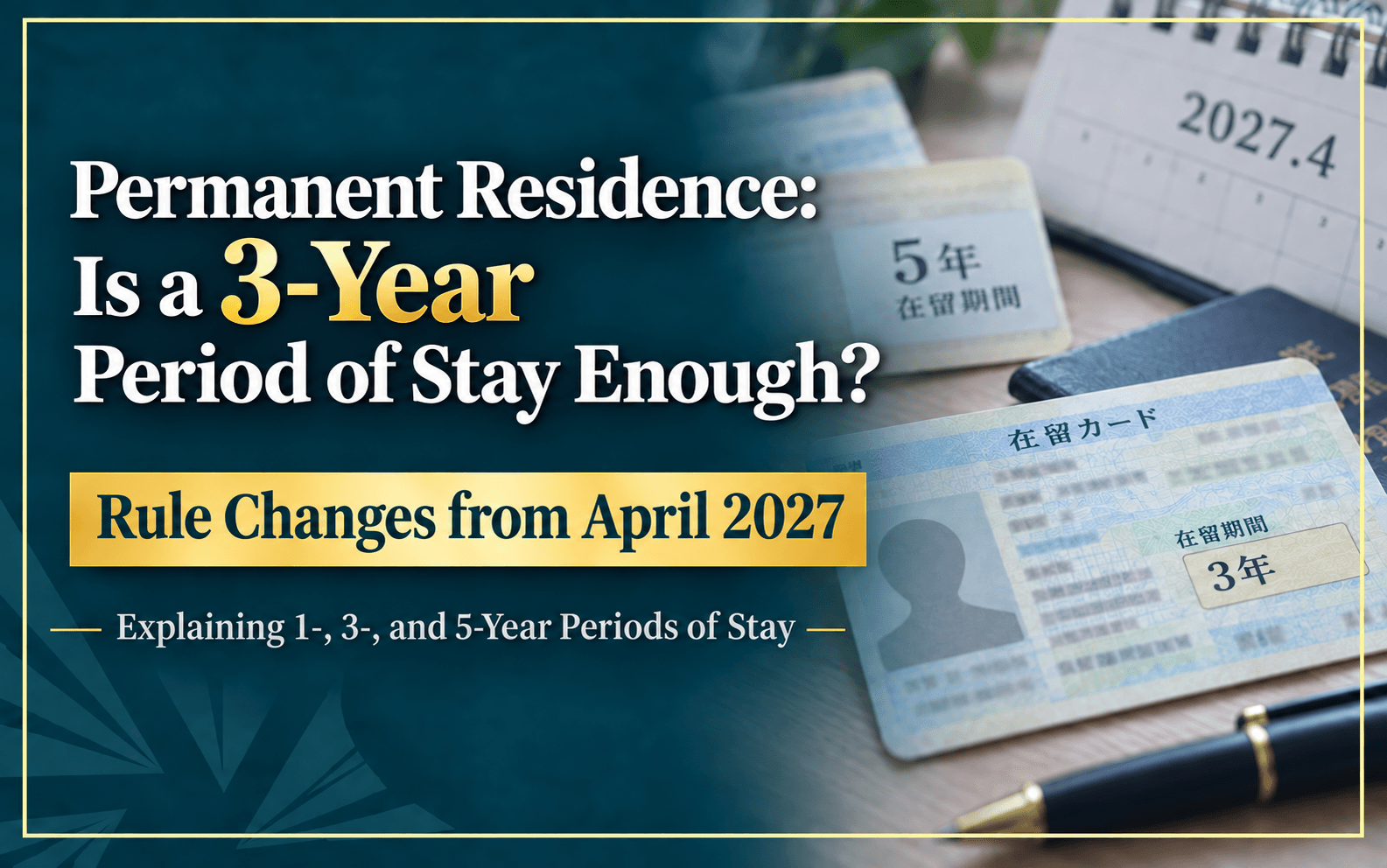
Can You Apply for Permanent Residence in Japan With a 3-Year Period of Stay? The “Maximum Period” Rule Changes in April 2027 【2026 Guide】
Can you apply for Japanese Permanent Residence with a 3-year period of stay? In 2026, a 3-year period is still treated as satisfying the “maximum period of stay” requirement, but the rule changes from April 1, 2027. This guide explains the treatment of 1-, 3- and 5-year periods, transitional measures and visa renewals while PR is pending.
Read More
Changed Jobs, Moved, Married or Divorced While Your Japanese Naturalization Application Is Pending? What to Report 【2026 Guide】
What should you do if you change jobs, resign, move, marry, divorce, have a child, renew your status of residence or travel overseas while your Japanese naturalization application is under review? This guide explains the changes that should be reported promptly to the Legal Affairs Bureau and when additional documents may be required.
Read More
Can Freelancers and Self-Employed Professionals Apply for Permanent Residence in Japan? Contracts, Taxes and Social Insurance 【2026 Guide】
Can freelancers and self-employed professionals qualify for Permanent Residence in Japan? This guide explains how Immigration reviews contract-based work, Engineer/Specialist in Humanities/International Services status, tax returns, resident tax, National Pension and National Health Insurance.
Read More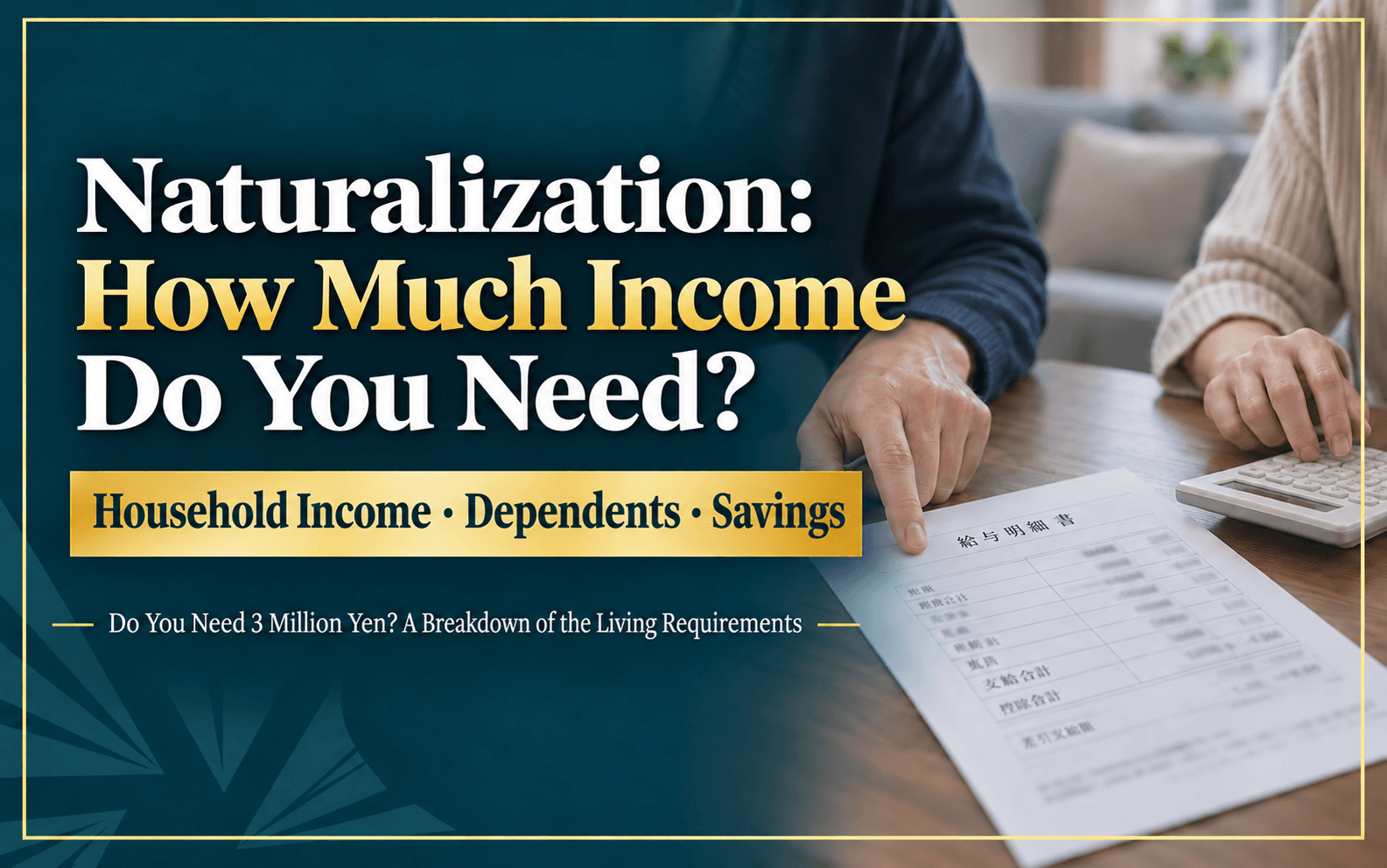
How Much Income Do You Need for Japanese Naturalization? Household Income, Dependents and Savings Explained 【2026 Guide】
Is there a minimum income of JPY 3 million or JPY 4 million for Japanese naturalization? Japan does not publish a nationwide fixed income threshold. The livelihood requirement is assessed on a household basis, taking into account spouse income, dependents, housing costs, savings and employment stability.
Read More